
Last updated November 2, 2026
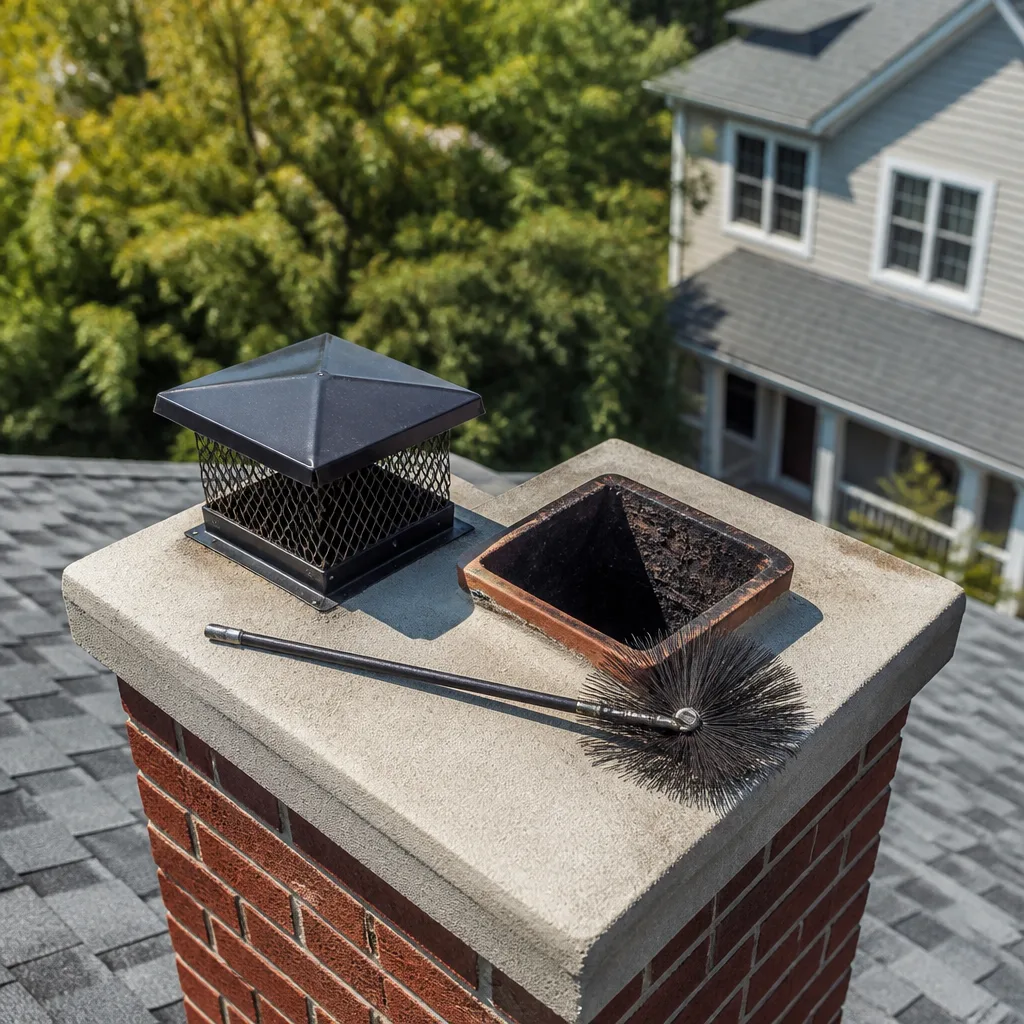 Sweep & inspection
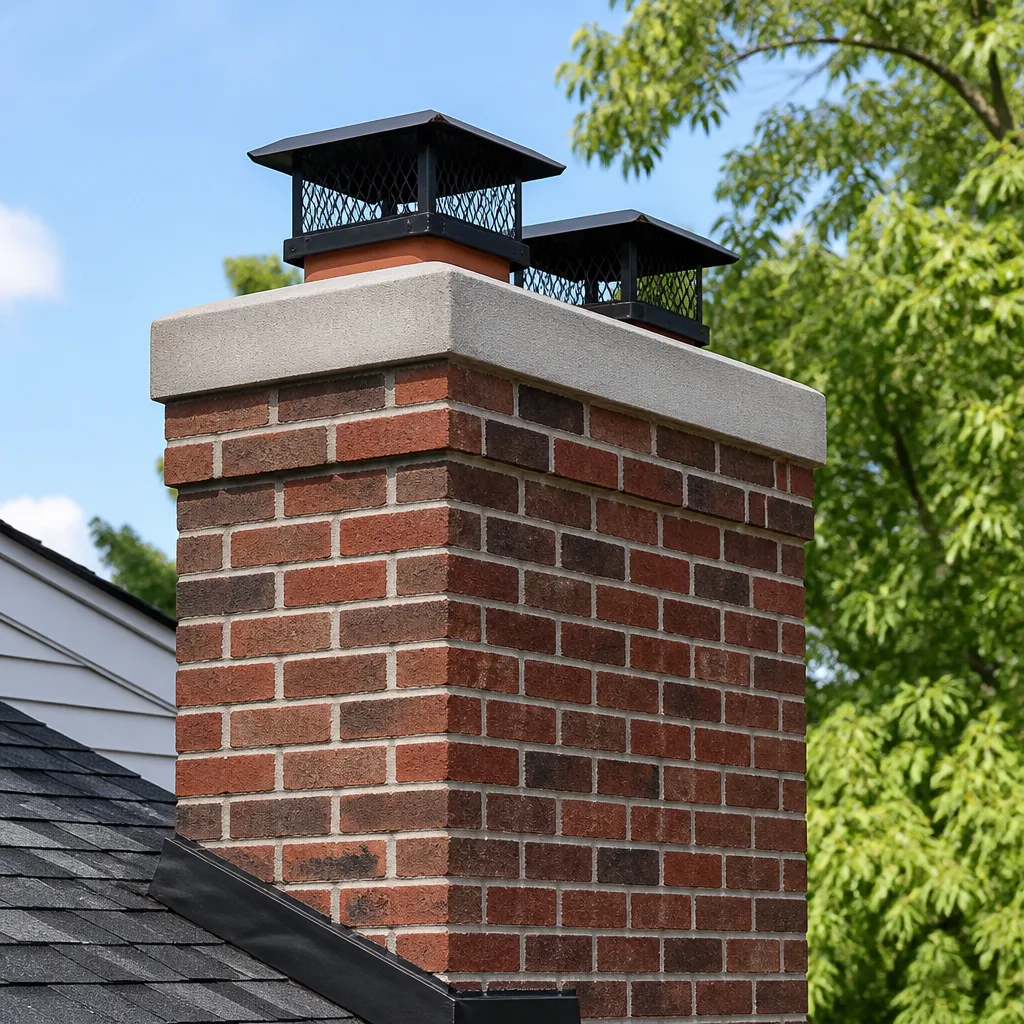 Caps & crowns
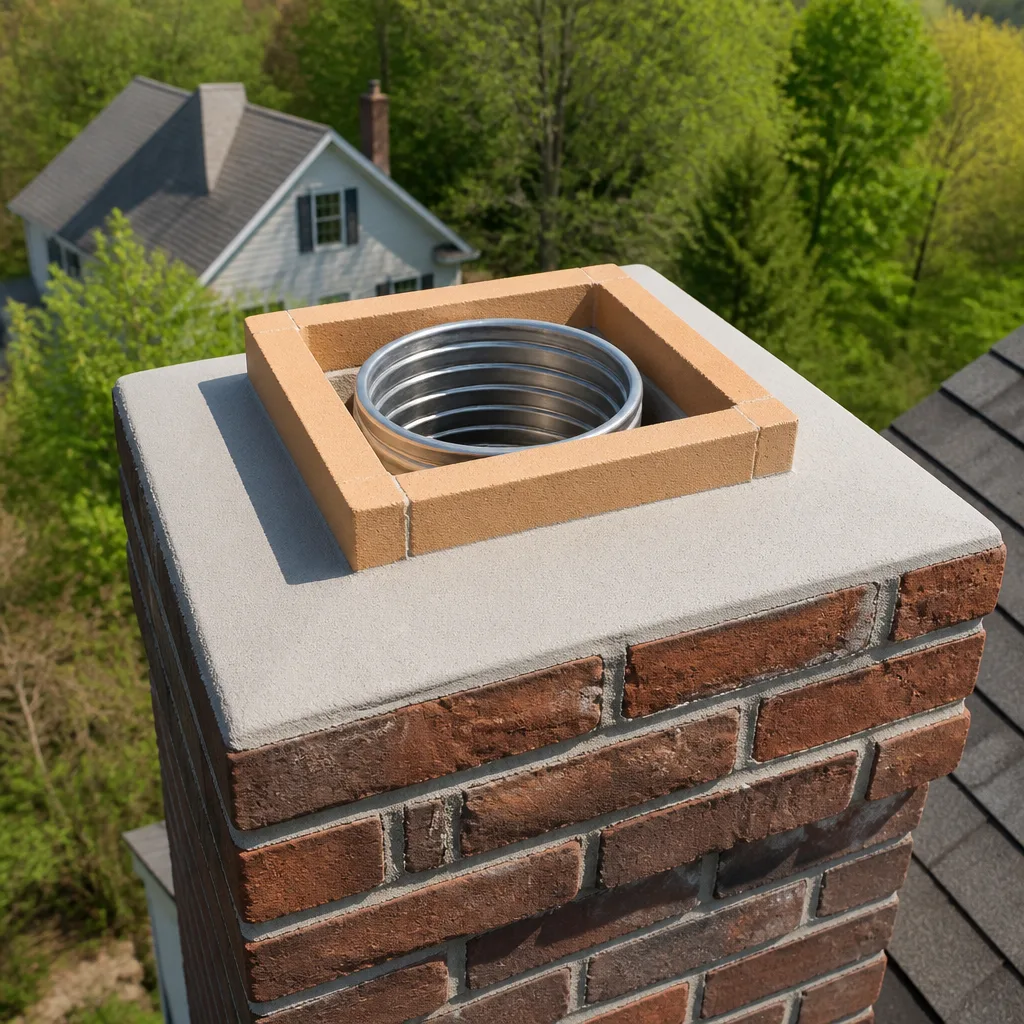 Flue relining
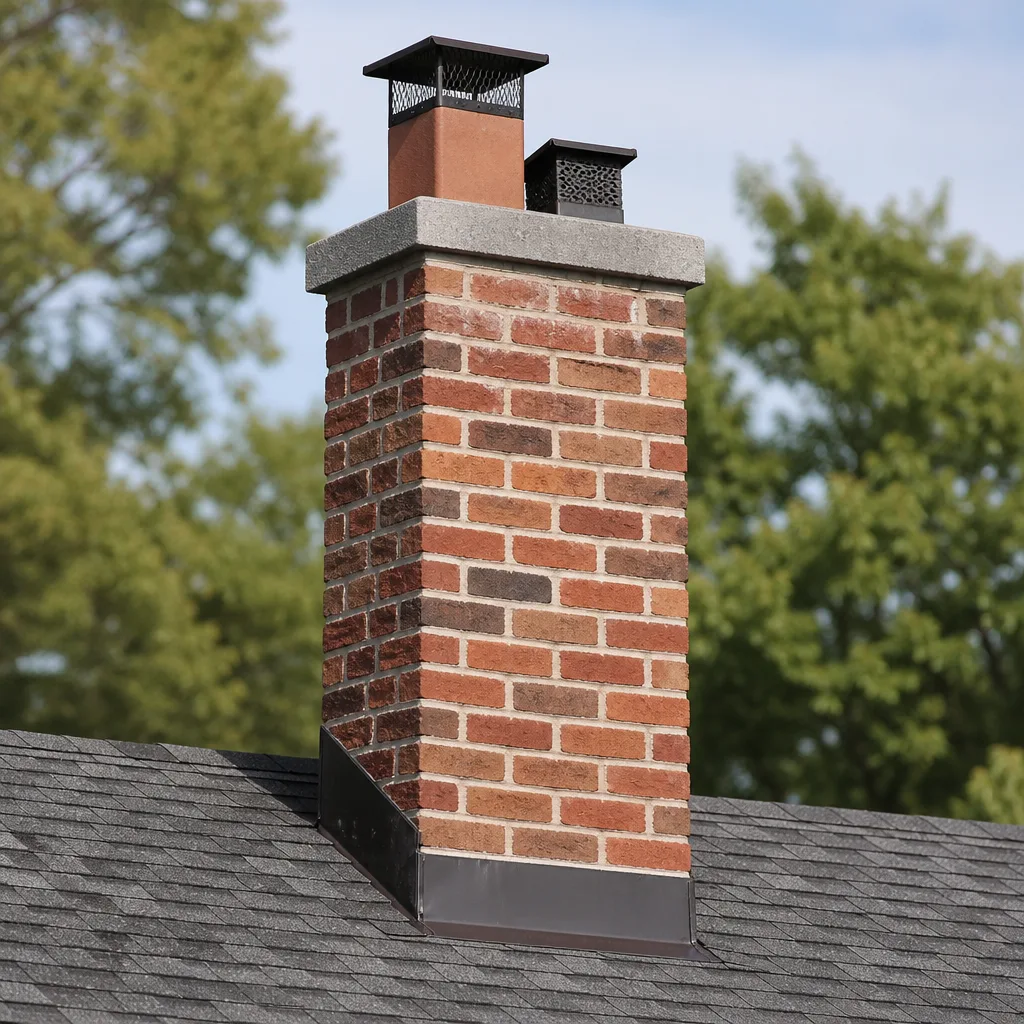 Masonry repair
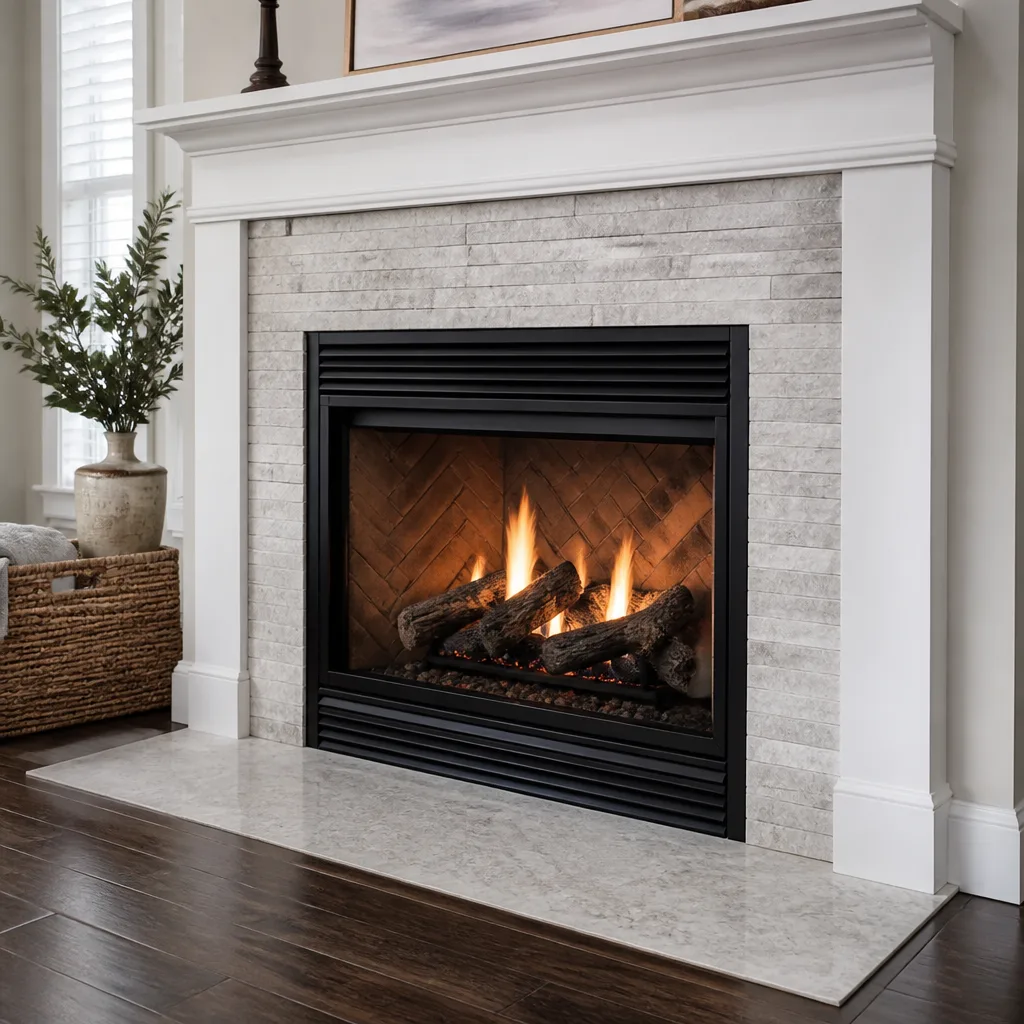 Gas fireplace service
Level 1 sweep and inspection to the NFPA 211 annual standard - flue, crown, cap, and flashing checked and photographed
Chimney sweep logs do not sweep chimneys. They loosen some creosote - which then falls where a brush and vacuum still have to collect it.
DIY vs Professional Chimney Cleaning: The Almaden Homeowner’s Decision Guide
Here’s something most chimney cleaning guides won’t tell you: the brushes, rods, and drop cloths sold at hardware stores aren’t the problem. They work fine. The real gap between a $80 DIY kit and a professional sweep isn’t about whether you can physically drag a brush through a flue. It’s about what you can’t see while you’re doing it, what you can’t assess about the liner behind the soot, and what you can’t document if something goes wrong later. This guide walks through the decision from every angle that matters to an Almaden homeowner: cost, risk, insurance, chimney type, and what actually happens to a fireplace that only ever gets amateur attention. For how to hire a chimney cleaning contractor in Almaden, see our step-by-step guide.
Styles & brands we work with
- Sweep & inspection
- Caps & crowns
- Flue relining
- Masonry repair
- Gas fireplace service
Quick Answer
DIY chimney cleaning is physically doable for a hands-on homeowner using a brush-and-rod kit, but it removes soot without assessing liner condition, hidden creosote deposits, or drafting problems. Professional chimney cleaning in Almaden combines mechanical removal with visual inspection, documentation, and the trained judgment to catch damage before it becomes a chimney fire or carbon monoxide leak. For most wood-burning fireplaces, the math favors professional service every one to two years, with light homeowner maintenance in between.
Table of Contents
- What a DIY Chimney Cleaning Can Realistically Accomplish
- What Professional Equipment and Training Actually Adds
- Chimney Types That Change the Risk Equation
- The Insurance and Liability Reality Most Guides Skip
- The Honest Cost Breakdown: DIY Kit vs Professional Service
- Legitimate Homeowner Maintenance Between Professional Visits
- Common Mistakes to Avoid
- When to Call a Professional
- Frequently Asked Questions
- The Bottom Line
What a DIY Chimney Cleaning Can Realistically Accomplish
Let’s be fair to the DIY approach. If you have a straight-run masonry chimney with a round or square terracotta liner, a brush-and-rod kit from any hardware store will remove loose soot and light creosote buildup from the flue walls. The mechanical action is simple: push the brush up, pull it down, repeat. For a chimney that was professionally swept last year and has only seen a season of occasional weekend fires, a DIY brushing removes the surface layer and keeps airflow moving.
That’s a real accomplishment, and it’s why hardware stores sell these kits. The problem is that chimney cleaning is never just about removing what a brush can reach. In Almaden, where winter fires run from November through March, a season of regular burning deposits more than just soft soot. Our seasonal chimney cleaning care for Almaden explains how to protect your system year-round. Creosote forms in three stages, and stage two and three creosote, which is tar-like or glazed and hard, does not come off with a homeowner-grade wire brush. Trying to scrape it off with hand tools usually just polishes the surface while the dangerous buildup remains underneath.
A DIY cleaning also can’t tell you anything about the condition of what’s behind the soot. Cracks in terracotta liner sections, gaps between flue tiles, water damage at the crown, a partially blocked chimney cap, all of these hide behind the exact same soot a brush removes. The DIY cleaner removes the evidence without reading it.
What Professional Equipment and Training Actually Adds
This is the section where the two approaches genuinely diverge, and it comes down to three things: containment, inspection, and judgment.
Containment and Air Quality
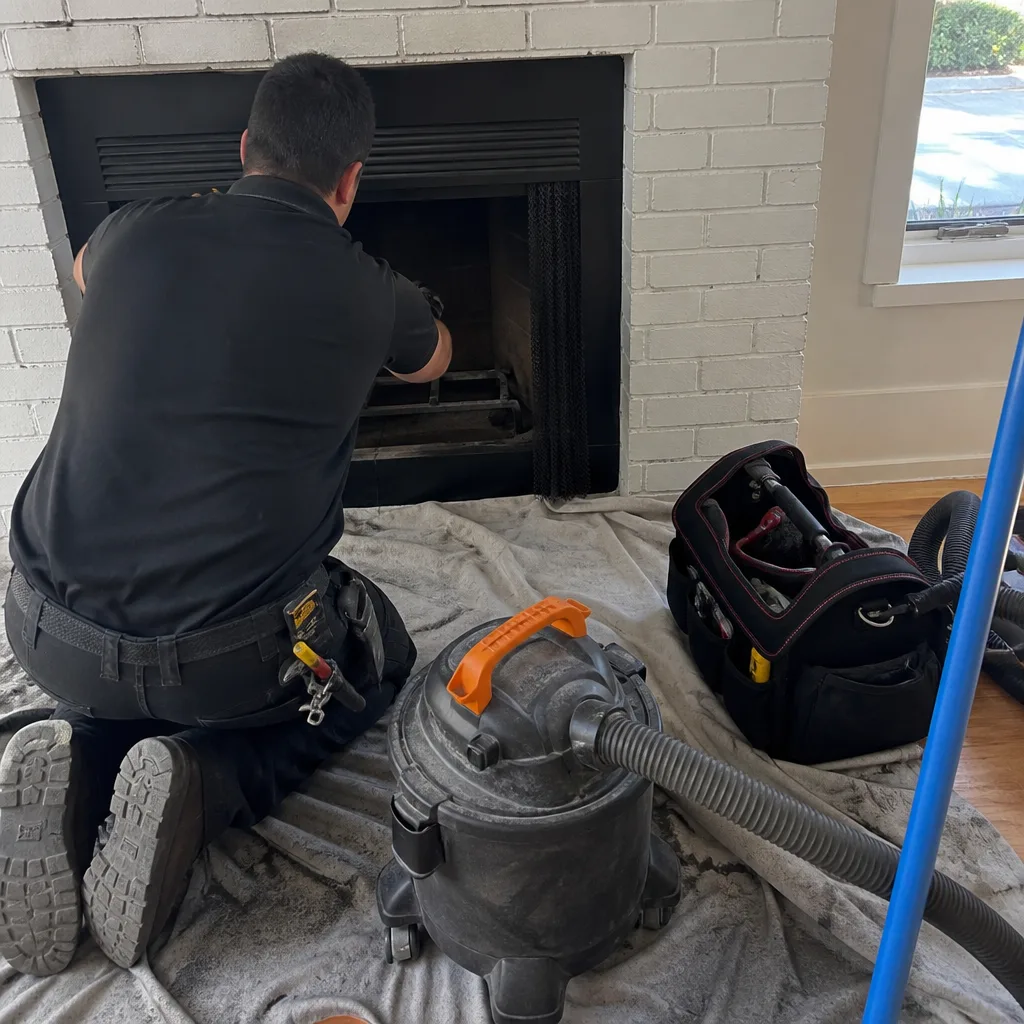
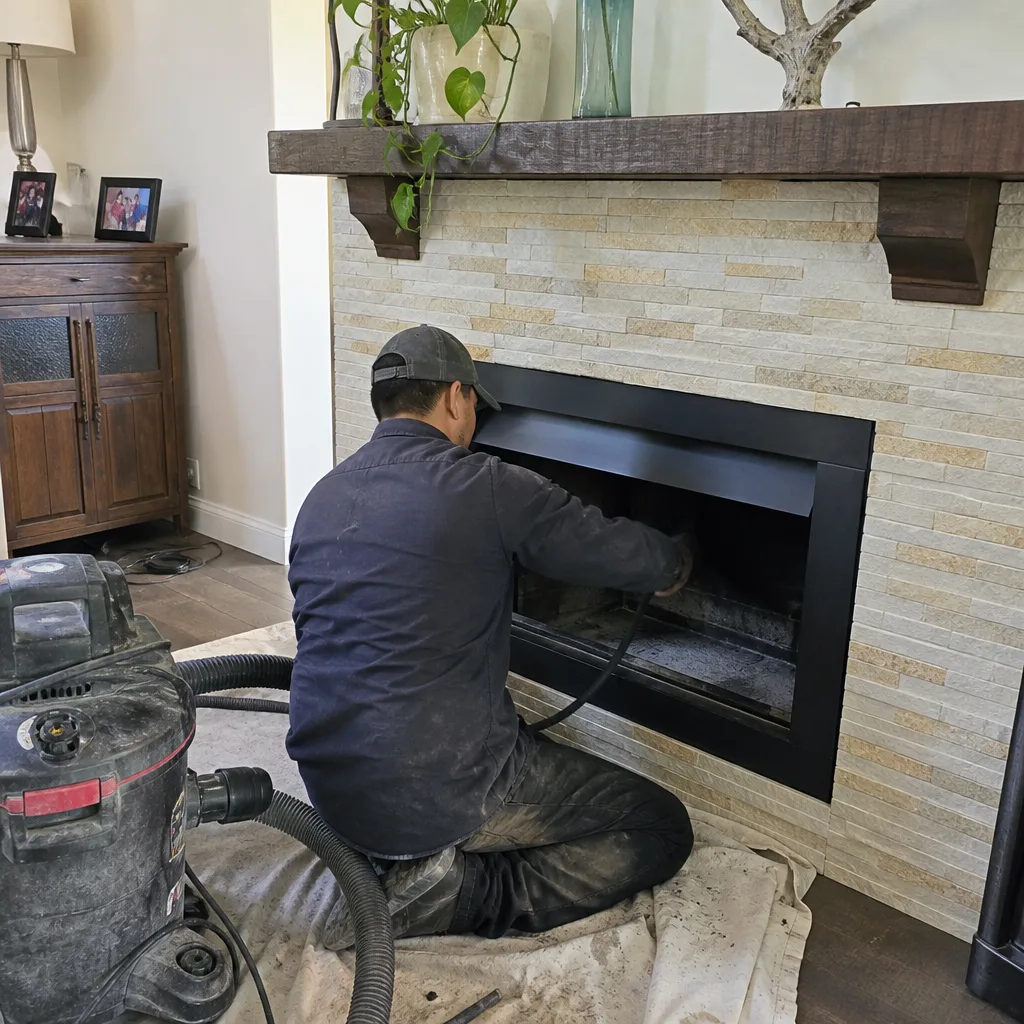
A professional sweep in Almaden doesn’t just loosen soot, it controls where that soot goes. We run a high-powered vacuum with a HEPA filter throughout the entire process, creating negative air pressure so that the fine particulate doesn’t drift into your living room, your carpet, or your lungs. A DIY brush job without professional containment releases a measurable amount of fine soot into the home. If anyone in your household has asthma, allergies, or respiratory sensitivity, that’s not a trivial difference.
Inspection Beyond the Brush
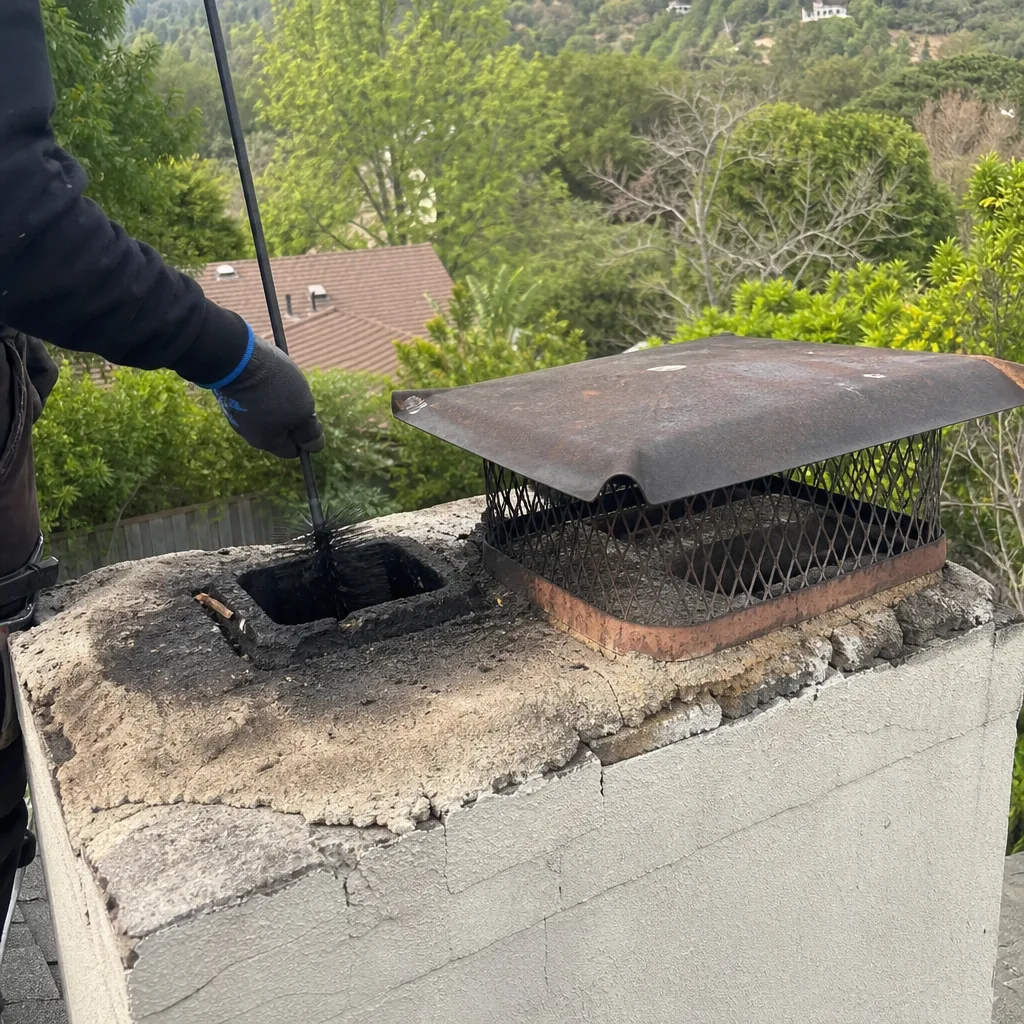
After the mechanical cleaning, a professional uses a camera system to inspect the full length of the flue. This is where the real value lives. The camera reveals hairline cracks in terracotta, deteriorated mortar joints, a missing or damaged rain cap, animal nesting debris above the damper, and early signs of liner failure, all things no brush reveals. When we resurface a flue with HeatShield or line one with DuraFlex, that decision starts with what the camera showed during and after the sweep.
Without that inspection step, you’re flying blind. The brush removed the soot, but you have no idea whether the chimney is structurally sound for next season’s fires.
Judgment From Repetition
We see dozens of Almaden chimneys every month. That repetition builds pattern recognition. When we find a specific creosote pattern in a fireplace that only burns pine, we know what’s behind it. When a factory-built fireplace shows soot staining in a particular configuration, we know the installation may have a clearance issue. That judgment isn’t snobbery against DIY work. It’s just accumulated exposure, the same way a mechanic who’s seen 500 transmissions recognizes a problem before the customer describes the sound.
Learn more about our Chimney Sweep Almaden home services and how we approach every job with inspection as standard.
Chimney Types That Change the Risk Equation
Not all chimneys carry the same DIY risk. Some types are genuinely dangerous to self-service, regardless of your skill level or confidence.
Factory-Built (Zero-Clearance) Fireplaces
If your home was built in the 1990s or later, chances are good you have a factory-built fireplace, not a traditional masonry chimney. These units have metal flue liners that are much thinner than terracotta and far easier to damage with an incorrectly sized brush. The clearances between the flue and combustible framing are engineered to tight tolerances. A scratched or dented metal liner disrupts airflow and can accelerate corrosion. Worse, some factory-built systems use proprietary components that require specific cleaning methods. A generic hardware store brush might be the wrong tool entirely.
Gas Log Conversions
If your wood-burning fireplace was converted to gas logs, DIY chimney cleaning creates a specific hazard. Gas logs produce water vapor as a combustion byproduct, which means anything you miss during cleaning becomes an acidic slurry against the liner. Gas fireplaces also require attention to the gas line, the burner, and the venting path, none of which a brush addresses. We handle these systems routinely and see conversion jobs in Almaden homes where the previous homeowner assumed the chimney no longer needed any maintenance at all.
Older Terracotta Liners
Many Almaden homes built between the 1960s and 1980s have terracotta flue liners. These liners crack over time due to thermal stress, and those cracks can be hidden behind creosote. If you run a brush through a cracked liner, you risk catching the edge of a loose tile and either dislodging it or breaking it further. A cracked or missing terracotta section is a serious fire hazard because it exposes the surrounding chimney structure to direct heat. Detecting that damage requires a camera inspection, not a brush.
If damage is found during a sweep, we can often handle the repair without referring you elsewhere. Our Chimney Repair in Downtown San Jose covers cracks, crowns, and liner replacement, handled by the same specialist who did the sweep.
The Insurance and Liability Reality Most Guides Skip
Here’s the part almost no DIY chimney cleaning article discusses: what happens when something goes wrong.
If you experience a chimney fire or a smoke-damage event, your homeowner’s insurance company will ask questions. One of the first questions is whether the chimney was professionally maintained. If the answer is no, and you performed the cleaning yourself, the insurer has a clear path to reduce or deny your claim. They may argue that the fire resulted from negligent maintenance, and without professional documentation, you have no counter-evidence.
A professional sweep provides a dated record: what was found, what was removed, what was recommended. That piece of paper matters in a claim. It establishes that you exercised reasonable care. A DIY job, no matter how thorough it felt, leaves you with nothing to show an adjuster.
There’s also the matter of what you don’t find. A homeowner who self-cleans their chimney and then has a fire months later may have missed a crack in a terracotta liner, a blocked cap, or a deteriorating mortar joint. The insurance company doesn’t care that the brush moved through the flue. They care that the condition that caused the fire wasn’t addressed.
In Almaden, where dry summers and wet winters put real stress on chimney crowns and caps, the documentation from an annual inspection is worth as much as the cleaning itself. Our Chimney Sweep in Downtown San Jose includes that written record with every service.
The Honest Cost Breakdown: DIY Kit vs Professional Service
Let’s put actual numbers on this, because cost is usually the first thing homeowners think about. See our chimney cleaning cost breakdown for Almaden homeowners for detailed 2026 pricing.
| Approach | Upfront Cost | What You Get | What’s Missing |
|---|---|---|---|
| DIY brush-and-rod kit | $60-$120 | Brush, rods, drop cloth, basic instructions | Containment, inspection, documentation, repair capability |
| Professional sweep (Almaden range) | $175-$350 depending on chimney type and condition | Cleaning, camera inspection, written report, cap/liner assessment, repair recommendations if needed | Nothing material, if you choose a specialist |
The DIY kit looks cheaper, and it is, until you account for what it can’t do. If a DIY cleaning misses a cracked liner and that leads to a chimney fire, the repair cost starts in the low thousands. If it misses a blocked cap and water damage spreads to your ceiling, you’re looking at structural repair. The professional fee includes the inspection that catches those issues early, when they’re inexpensive to fix.
There’s also the time factor. A first-time DIY chimney cleaning realistically takes three to four hours, including setup, the climbing, the cleanup of fine soot that escaped the drop cloth, and the inevitable trip back to the hardware store for a rod extension you didn’t know you needed. For most Almaden homeowners, that’s a weekend afternoon. The professional does it in about 60 to 90 minutes, leaves no soot in the house, and hands you a written assessment.
Legitimate Homeowner Maintenance Between Professional Visits
The reasonable middle ground isn’t “DIY everything” or “call a professional for every small thing.” It’s knowing what you can safely do between professional visits, and what you should leave alone.
Here’s what we tell homeowners in Almaden they can do themselves:
- Check the damper monthly during burning season. Open it before every fire and close it after the fire is completely out and the embers are cold. A damper that won’t fully open or close needs professional attention.
- Look for visible soot or staining on the fireplace face, mantel, or ceiling above the firebox. Soot where it shouldn’t be indicates a drafting problem. Don’t ignore it.
- Watch for water in the firebox after heavy rain. Water entry means the cap, crown, or flashing has failed. This is not normal and will not fix itself.
- Note any unusual smells from the fireplace during warm months. A strong smoky or musty odor in August suggests creosote buildup or moisture in the flue.
- Keep the area around the fireplace clear. No furniture, rugs, or decor within three feet of the firebox opening while a fire is burning.
What you should not do yourself: access the roof to inspect the cap or crown unless you have proper fall protection and a safe ladder setup, attempt to remove stage two or three creosote, or do any work on a gas fireplace or gas log set beyond basic cleaning of the visible ceramic logs. Gas systems carry carbon monoxide risks that aren’t worth the savings.
Common Mistakes to Avoid
- Assuming soot removal equals safety. A clean-looking flue can still have cracked liners, failed mortar, or a compromised cap. The brush removed the symptom, not the condition.
- Using the wrong brush size on a factory-built fireplace. Metal flue liners are thin. An oversized brush can scratch, dent, or tear them. Those scratches become corrosion points.
- Skipping the camera inspection because the sweep “looked fine.” The failure modes that cause chimney fires are invisible behind soot until you remove the soot and look. By then, the DIY cleaner has usually packed up and called it done.
- Treating a gas log conversion like it needs no maintenance at all. Gas fireplaces produce acidic water vapor. They need annual inspection as much as wood burners do, and they have components a brush can’t address.
- Cleaning from the roof without proper safety gear. Roof work on Almaden homes with tile or steep pitches carries real fall risk. A chimney crown is not a stable platform.
- Waiting until October to book a professional sweep. By the time the first cold snap hits Almaden, sweeps are booked out for weeks. Spring and summer are the smarter seasons for chimney work.
When to Call a Professional
Call a professional when you notice any of these: visible smoke entering the room instead of drafting up the flue, a strong creosote smell during summer months, water in the firebox after rain, soot stains appearing on the ceiling or walls above the fireplace, or a chimney that hasn’t been professionally inspected in more than two years. Also call before you buy a home with a fireplace, before converting a wood burner to gas, and after any chimney fire, even a small one. Chimney Sweep Almaden offers free estimates in Almaden, call (833) 593-6691 to schedule a sweep or inspection.
Frequently Asked Questions
Professional chimney cleaning in Almaden typically costs between $175 and $350 depending on the chimney type, condition, and whether additional services like a camera inspection or cap replacement are needed. The price includes the cleaning, a visual inspection, and written documentation. Call (833) 593-6691 for an exact quote, estimates are free.
Most wood-burning chimneys used regularly should be swept every one to two years, and annually if you burn softwoods or unseasoned wood. Gas fireplaces should be inspected annually even though they produce less visible soot. If you’re unsure how long it’s been, call (833) 593-6691 and we’ll assess the condition.
You can remove loose soot from a straight-run chimney with a brush-and-rod kit, but you cannot assess liner condition, detect hidden cracks, or document the work for insurance purposes. For factory-built fireplaces, gas log conversions, or chimneys with older terracotta liners, DIY cleaning carries higher risk than most homeowners realize.
Creosote accumulates in stages, and stage three creosote is a hard, glazed, highly flammable coating that professional equipment is needed to remove. The longer it builds up, the higher the risk of a chimney fire, and the more expensive the eventual cleaning becomes. Skipping years also allows water damage and liner deterioration to progress undetected.
No, your dryer vent is a separate system, but it’s a leading cause of residential fires according to NFPA data. Lint builds up in dryer vents the way creosote builds up in chimneys, and both need mechanical cleaning. Our Dryer Vent Cleaning in Downtown San Jose handles both systems so neither fire risk gets ignored.
Yes. When our camera inspection reveals cracked liners, damaged crowns, or deteriorated mortar, we can often handle the repair during the same visit rather than handing you off to another contractor. We use professional-grade materials like HeatShield for resurfacing and DuraFlex for liner replacement, sourced through trade-recognized supply networks including Olympia Chimney and Gelco.
The Bottom Line
The DIY chimney cleaning question isn’t about whether you’re capable of moving a brush through a flue. It’s about what you’re not seeing while you do it. A professional sweep in Almaden removes the soot, inspects what was behind it, documents the condition for your insurance company, and catches damage while it’s still cheap to fix. That’s the part the $80 kit doesn’t include. Between professional visits, do the basic homeowner checks: damper function, visible soot, water entry, unusual smells. Browse more guides & resources on chimney maintenance and safety. And when in doubt, call a specialist rather than guessing. The cost of a sweep is a fraction of the cost of a chimney fire, and you’ll have the paper trail to prove you did the right thing.
Written by the team at Chimney Sweep Almaden, serving Almaden since 2017.
See the difference
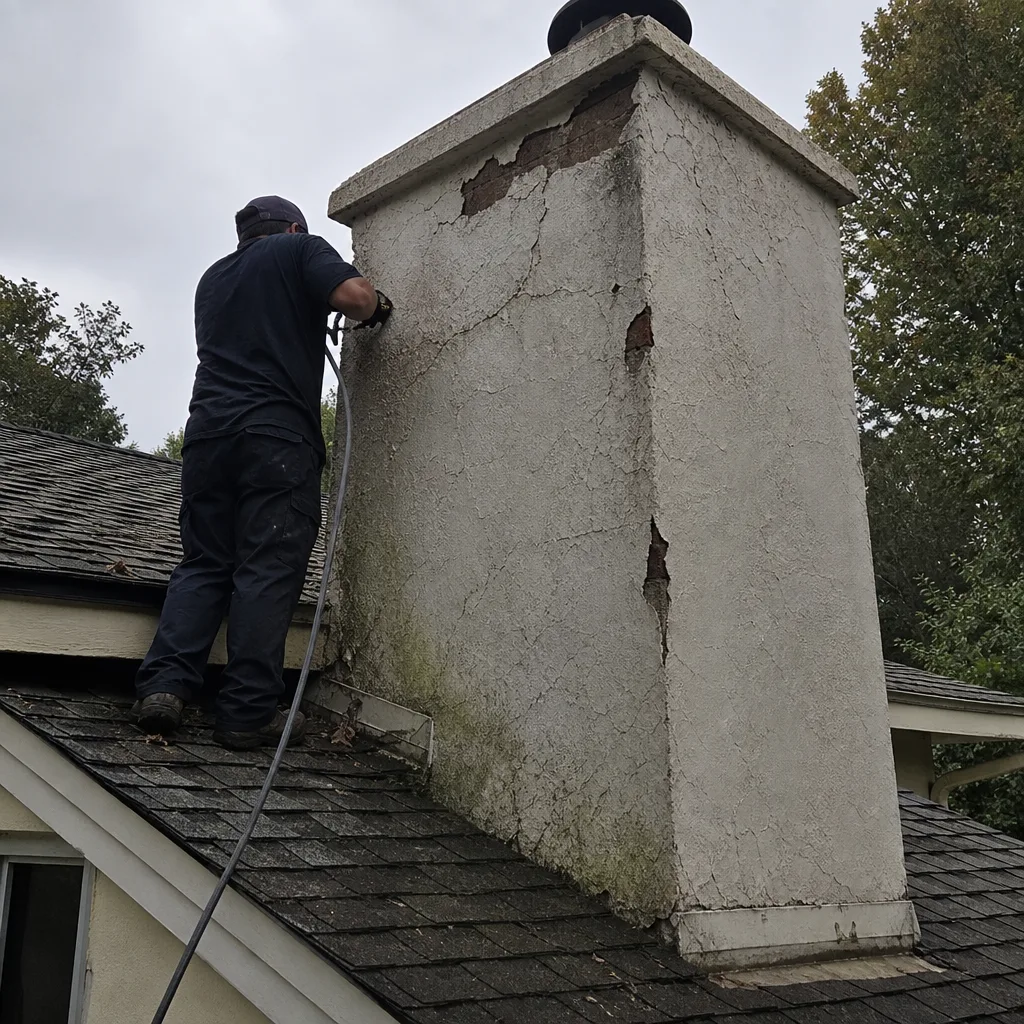 Before
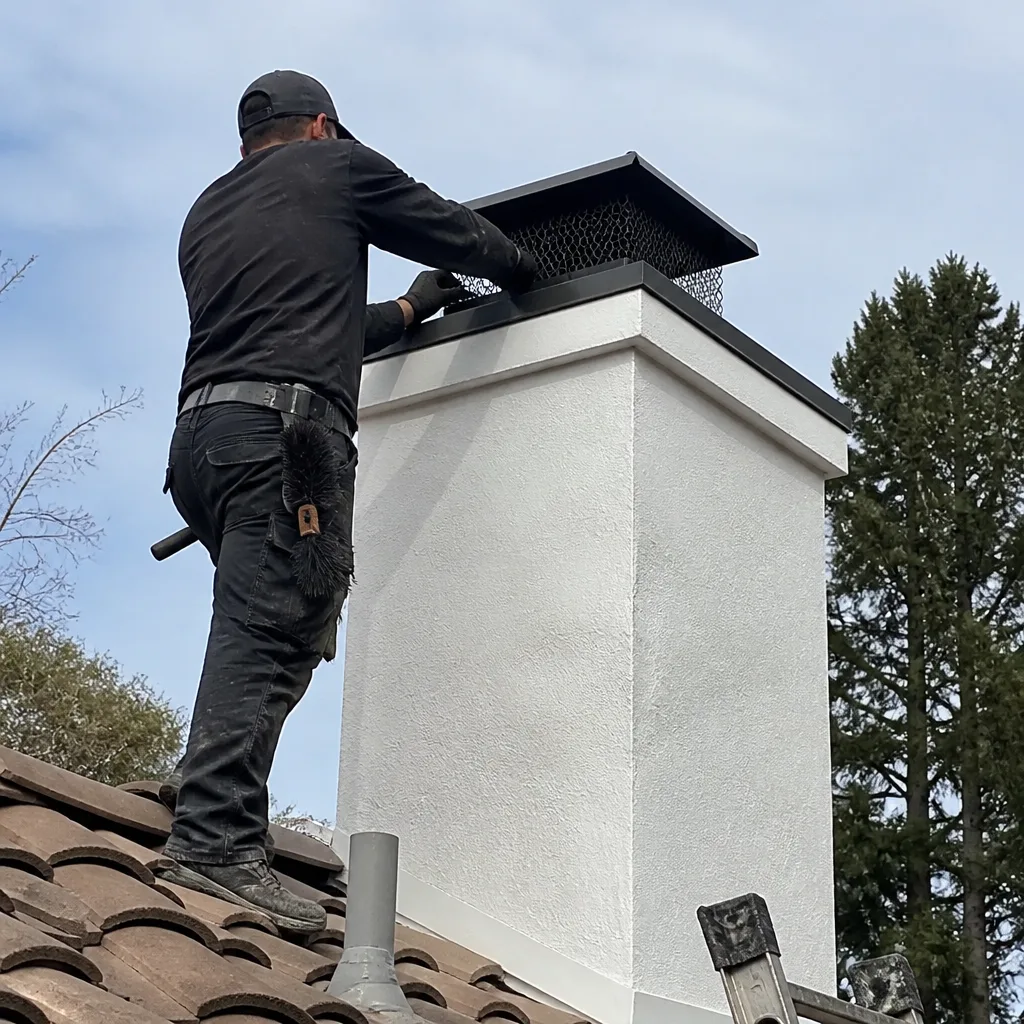 After
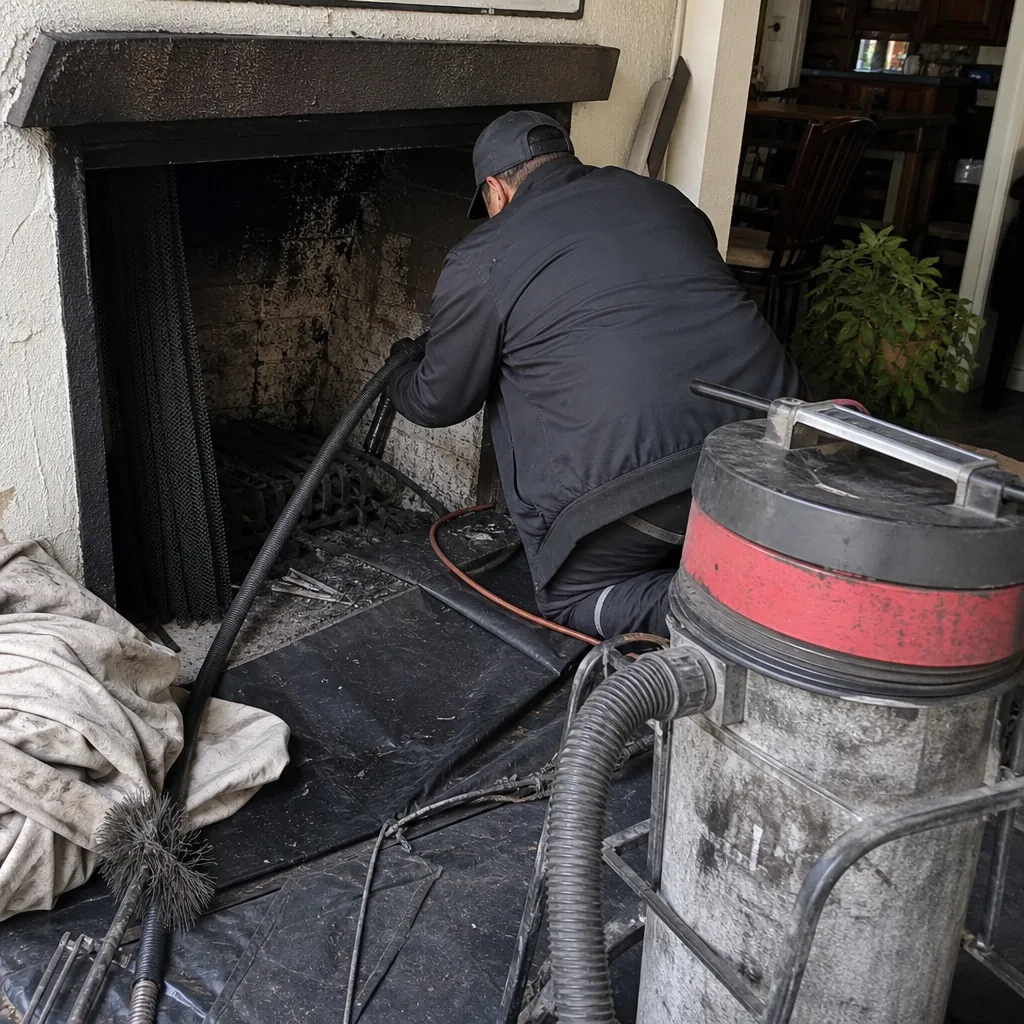 Before
 After
 Before
 After