
Last updated November 3, 2026
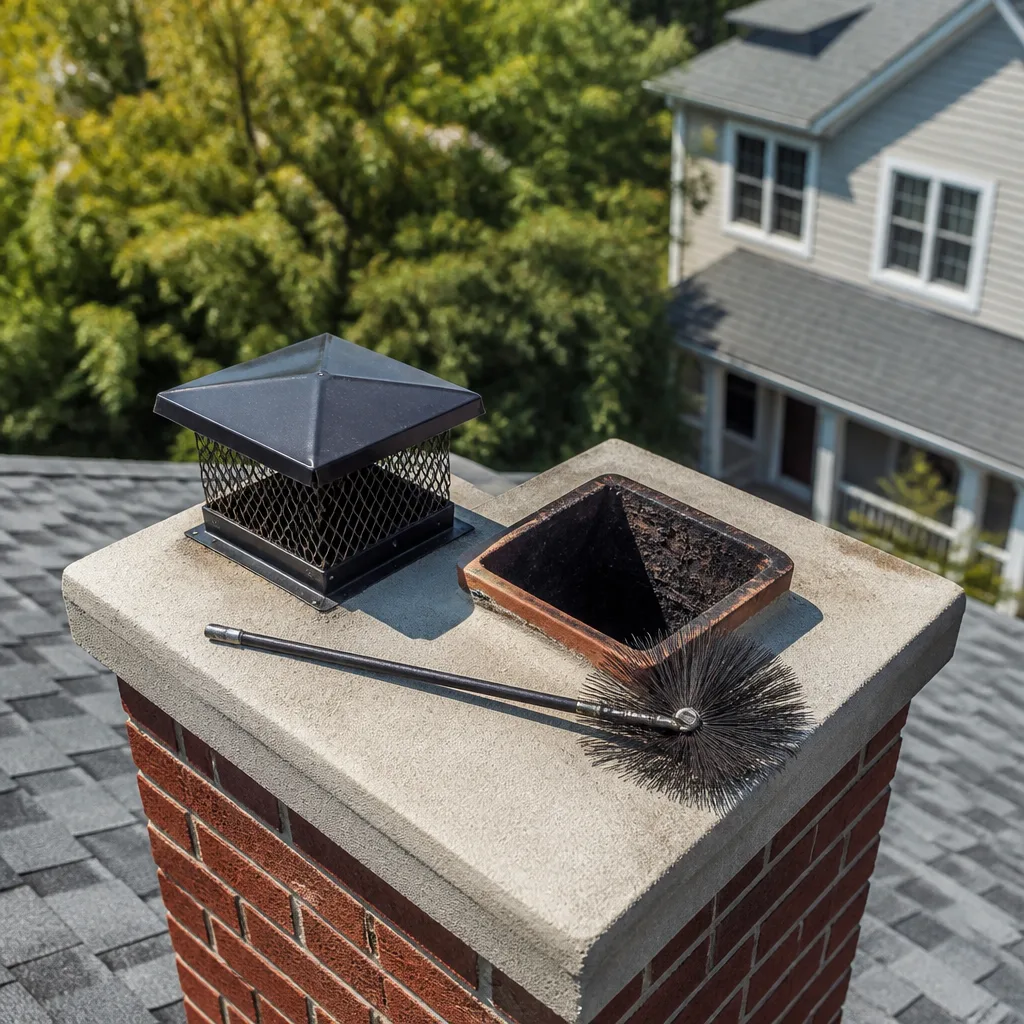 Sweep & inspection
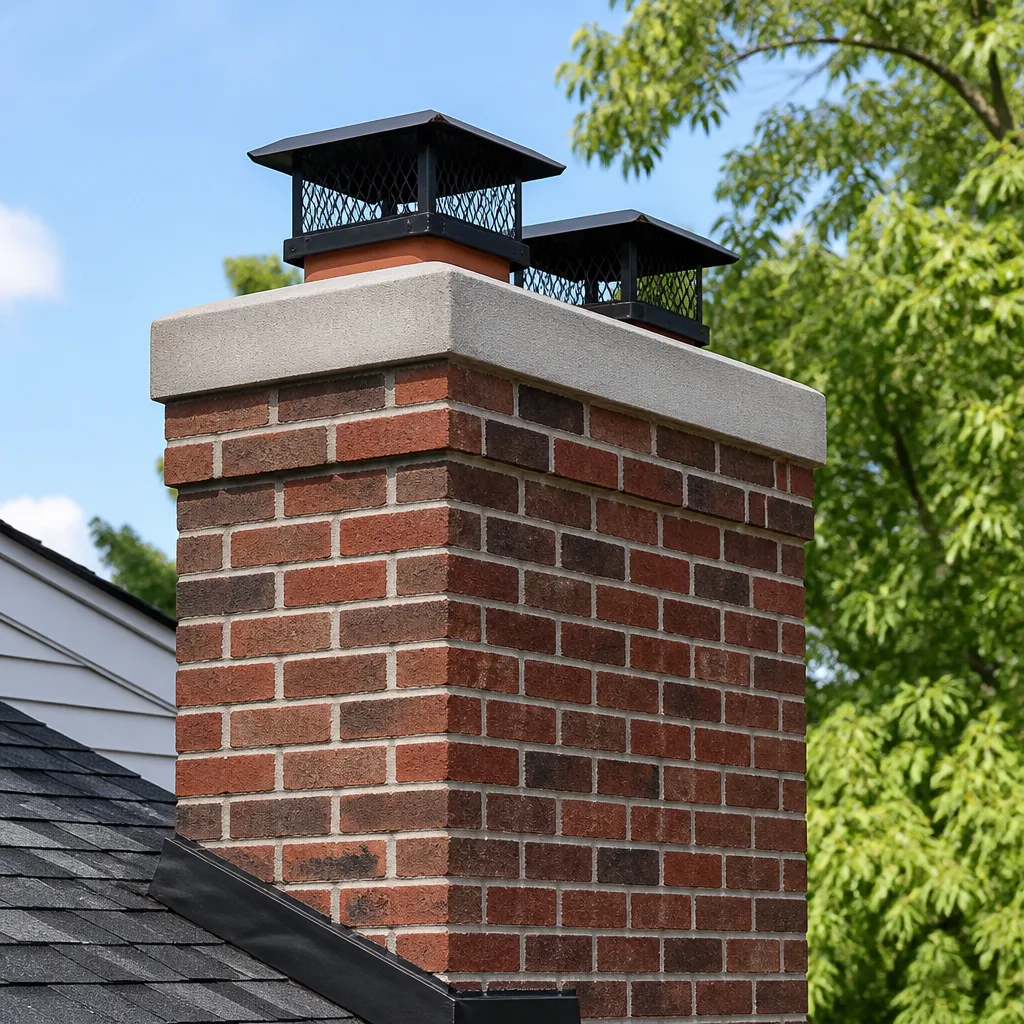 Caps & crowns
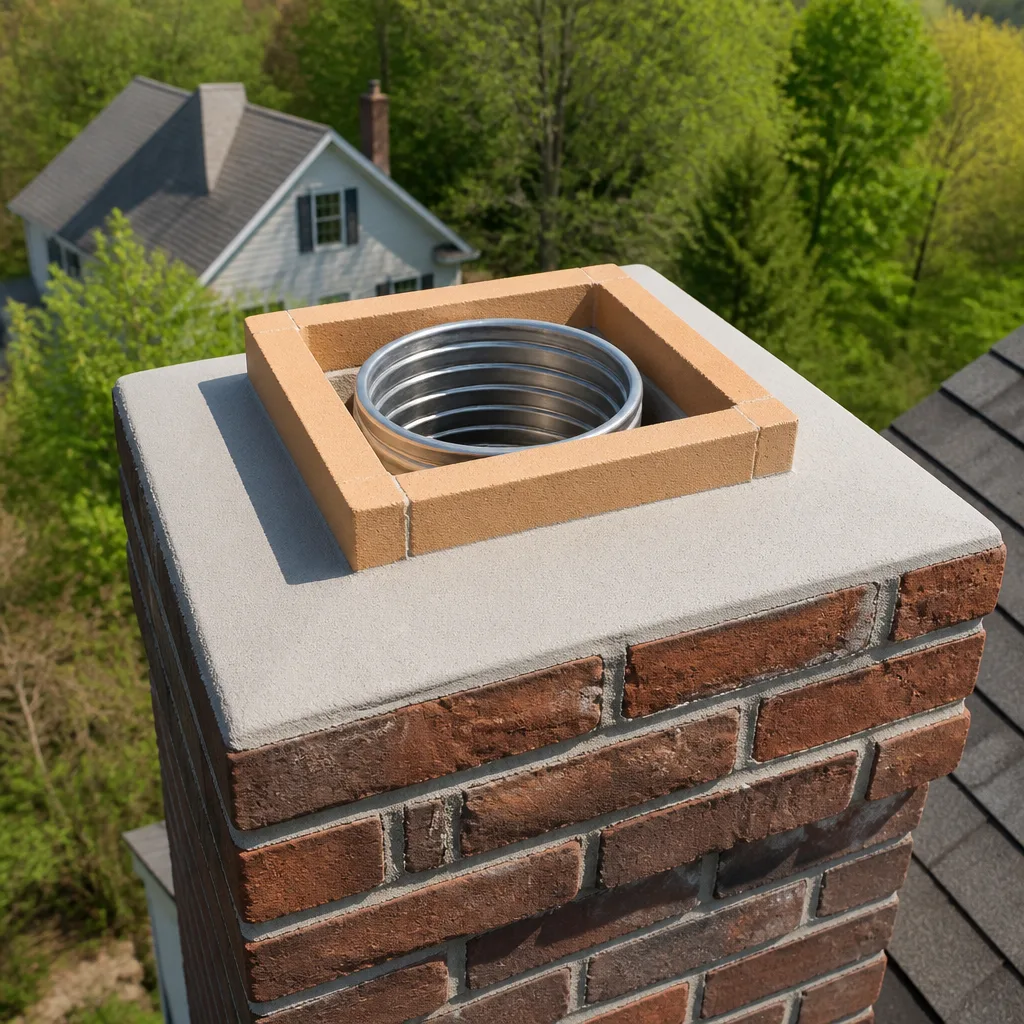 Flue relining
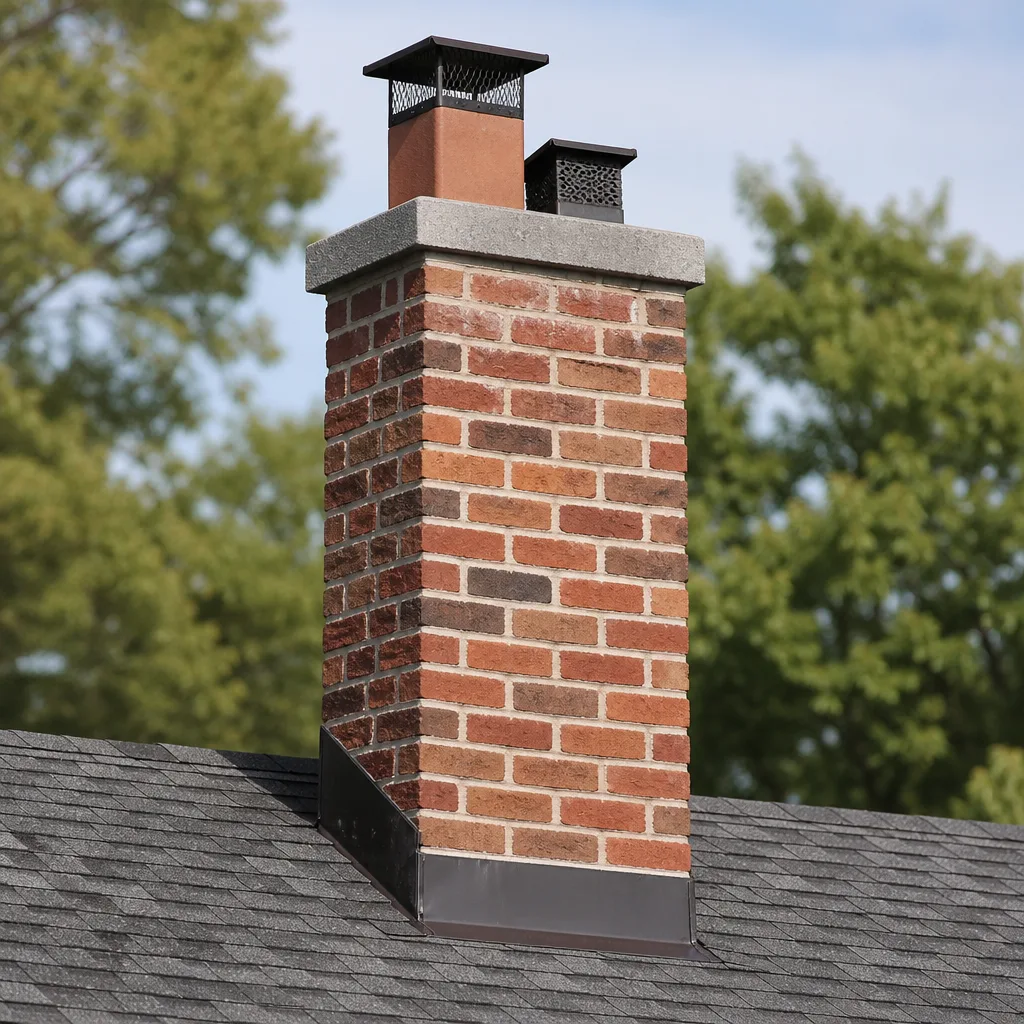 Masonry repair
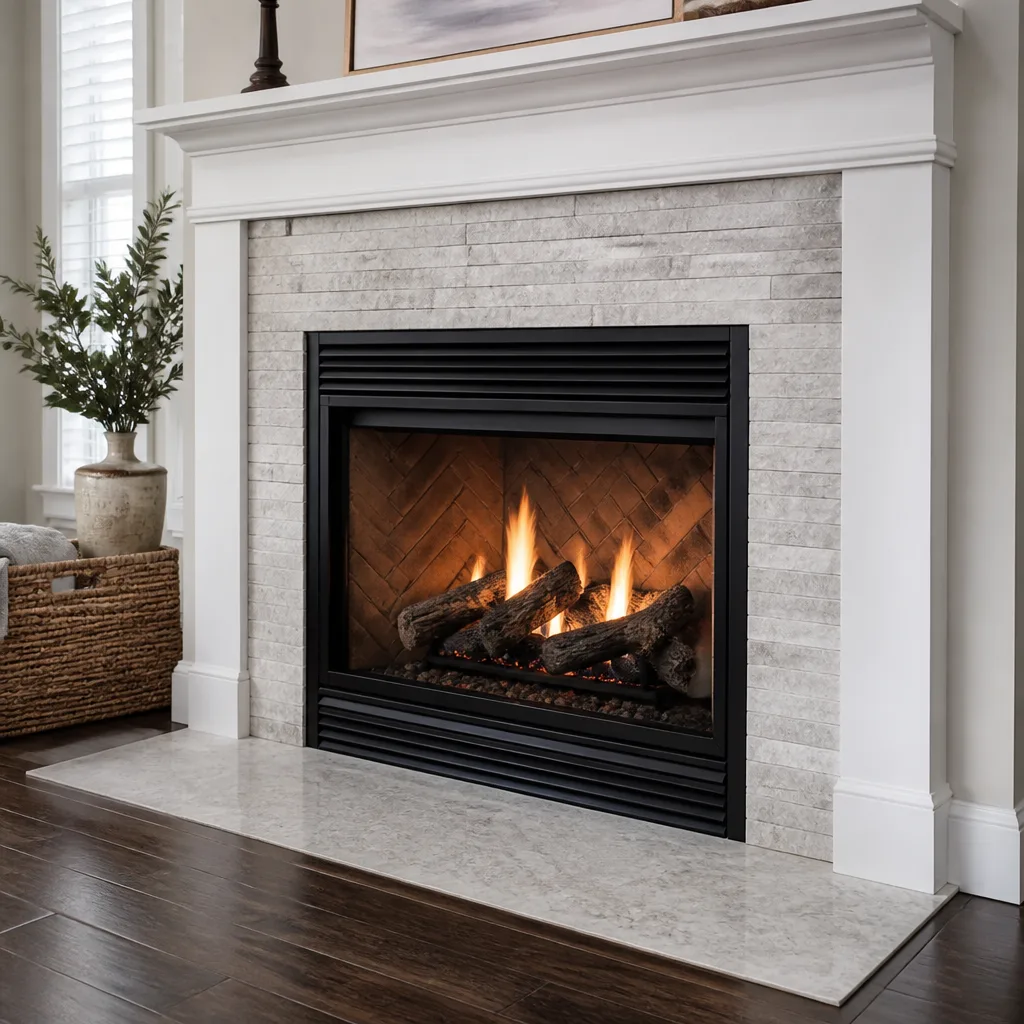 Gas fireplace service
Level 1 sweep and inspection to the NFPA 211 annual standard - flue, crown, cap, and flashing checked and photographed
Chimney sweep logs do not sweep chimneys. They loosen some creosote - which then falls where a brush and vacuum still have to collect it.
The Complete Chimney Sweep Guide for Almaden Homeowners
Almaden Valley sits in a low-wind basin where smoke and creosote behave differently than in hillside or coastal homes. A standard sweep schedule designed for Denver or Chicago doesn’t translate cleanly here, and we’ve watched too many Almaden homeowners discover that the hard way: a chimney that looks fine from the hearth but is quietly accumulating deposits at a rate their previous sweep never accounted for. This guide explains what actually happens during a proper Chimney Sweep in Almaden, why the sequence matters, and how local conditions from BAAQMD burn restrictions to clay-heavy soil affect your chimney’s performance. You’ll learn what a thorough sweep includes, what it costs, when you can wait, and when you shouldn’t.
Quick Answer
A Complete Guide to Chimney Cleaning in Almaden starts with knowing that a sweep typically takes 45 to 90 minutes and costs between $189 and $349 for a standard Level 1 cleaning, depending on the flue’s condition, height, and how long it’s been since the last service. The sweep should include a visual inspection, mechanical brushing, HEPA-filtered vacuum collection, and a written report of what was found. If you have a wood-burning fireplace you use regularly, schedule a sweep annually; gas fireplaces can usually go two to three years between cleanings.
Styles & brands we work with
- Sweep & inspection
- Caps & crowns
- Flue relining
- Masonry repair
- Gas fireplace service
Table of Contents
- Why Almaden Is Different: Air, Soil, and Fireplace Load
- Inspection Levels: What Your Sweep Can and Can’t Tell You
- Two Cleaning Methods: Rod-and-Brush vs. Vacuum-and-Camera
- Aging Clay Tile Flues in Almaden’s 1960s-80s Tract Homes
- What the Sweep Actually Does: Step-by-Step Sequence
- Before the Sweep Arrives: How to Prepare
- What a Chimney Sweep Costs in Almaden: Real Numbers
- Common Mistakes to Avoid
- When to Call a Professional
- Frequently Asked Questions
Why Almaden Is Different: Air, Soil, and Fireplace Load
Almaden Valley’s geography does something most chimney guides ignore. The valley floor sits at roughly 250 to 400 feet of elevation, ringed by the Santa Cruz Mountains to the west and the Diablo Range to the east. That basin shape, combined with the Santa Clara Valley’s well-documented inversion layer, traps cooler air near the ground during winter months. For your chimney, that means two things: smoke doesn’t rise and disperse as efficiently as it does in a hillside home, and the fireplace often ends up doing more work than it would in a windier location.
When smoke lingers near the roofline, combustion byproducts have more time to cool inside the flue before escaping. Cool smoke deposits creosote faster. In a coastal home with steady afternoon wind, the same fire might produce half the creosote accumulation you’d see in Almaden. We’ve swept chimneys in the Country Club and Pioneer neighborhoods that accumulated a quarter-inch of glazed creosote in a single season, not because the homeowner burned anything unusual, but because the smoke sat in the flue long enough to condense.
Then there’s the soil. Almaden sits on clay-heavy ground, part of the broader Santa Clara valley alluvial deposits. Clay soil expands and contracts with moisture. Over decades, that movement shifts foundations, which shifts chimney stacks. A chimney that was perfectly plumb in 1975 may be off by half a degree today. That’s not visible from the ground, but it’s enough to create a gap between the flue liner and the masonry, or to crack a clay tile. That’s why a sweep in Almaden should always include a structural observation, not just a brushing.
And then there’s BAAQMD. The Bay Area Air Quality Management District issues Winter Spare the Air alerts that prohibit wood burning on the worst inversion days. Most Almaden homeowners know the rule, but what they don’t realize is that how they respond to those alerts affects their chimney. A fireplace that runs hot for four nights in a row, then sits cold for a week during a burn restriction, then fires up again goes through more thermal cycling than one used steadily. Thermal cycling cracks clay liners and loosens mortar joints. The intermittent burn pattern that BAAQMD forces on Almaden residents is actually harder on chimneys than steady daily use.
What does this mean practically? If you burn wood in Almaden two to four nights a week from November through March, you should not stretch your sweep interval past 12 months. If you burn only during holidays or occasional evenings, 18 to 24 months may be acceptable, but only if the flue is in good condition to begin with. The chimney’s history matters more than a generic calendar.
Inspection Levels: What Your Sweep Can and Can’t Tell You
Most homeowners don’t know that a “chimney sweep” is actually two separate acts: the inspection and the cleaning. The inspection is governed by the National Fire Protection Association’s Standard 211, which defines three levels. Your sweep’s pricing and what they can legally tell you about your chimney depends entirely on which level applies to your situation.
Level 1 is the basic inspection included with a standard sweep. The technician looks at the readily accessible portions of the chimney: the firebox, the damper, the visible flue from above and below, and the exterior from the ground. It’s visual, non-invasive, and confirms that the chimney is suitable for continued use under the same conditions. A Level 1 is appropriate when nothing has changed: same fireplace, same fuel, same usage pattern, no known problems.
Level 2 goes further. It includes everything in Level 1 plus a camera scan of the flue interior, an inspection of the attic and crawlspace where the chimney passes through, and a closer look at accessible exterior surfaces. Level 2 is triggered when something has changed: you bought the home, you changed fuel type, you experienced an event like a chimney fire or earthquake, or you’re relining. In Almaden, with its known seismic activity and aging housing stock, we recommend a Level 2 for anyone who hasn’t had a camera inspection in the last five years, even if nothing seems wrong. This guide is also a good companion to our Chimney Repair in Downtown San Jose page, which covers what happens when a Level 2 finds something.
Level 3 is reserved for when a Level 2 reveals a suspected hidden hazard. It typically involves removing portions of the chimney structure, interior wall, or roof to access concealed areas. Level 3 inspections are rare, expensive, and usually follow a chimney fire or a major structural concern. You should never be pushed into a Level 3 without a clear, photographed reason.
Here’s what matters for Almaden homeowners: many sweeps in the Bay Area still operate at Level 1 by default and only pull out a camera when you ask. A proper modern sweep should offer camera documentation as a standard part of any service where the flue hasn’t been inspected in years. If a sweep tells you the flue has a crack but shows you no footage, you have no way to verify the claim. That’s a problem, because flue cracks lead to liner recommendations, and liners cost thousands. That’s why we run a camera on every sweep where the flue hasn’t been documented recently, and why we encourage you to ask for footage before writing any check.
Two Cleaning Methods: Rod-and-Brush vs. Vacuum-and-Camera
There are two fundamentally different approaches to chimney cleaning, and they produce different results. Understanding this distinction – covered in our DIY vs Professional Chimney Cleaning: The Almaden Homeowner’s Decision Guide – is how you separate a professional sweep from a guy with a brush on the end of a drill.
Rod-and-brush cleaning is the traditional method. The sweep assembles sectional fiberglass rods, attaches a steel or poly brush sized to your flue, and scrubs from the top down or bottom up. This is effective for removing soft and crunchy creosote deposits from regularly maintained chimneys. It’s fast, it’s been used for 200 years, and for a chimney that’s swept annually, it’s usually sufficient. The limitation is visibility: the sweep is scrubbing blind, and if they don’t run a camera afterward, they can’t confirm that every surface was actually cleaned.
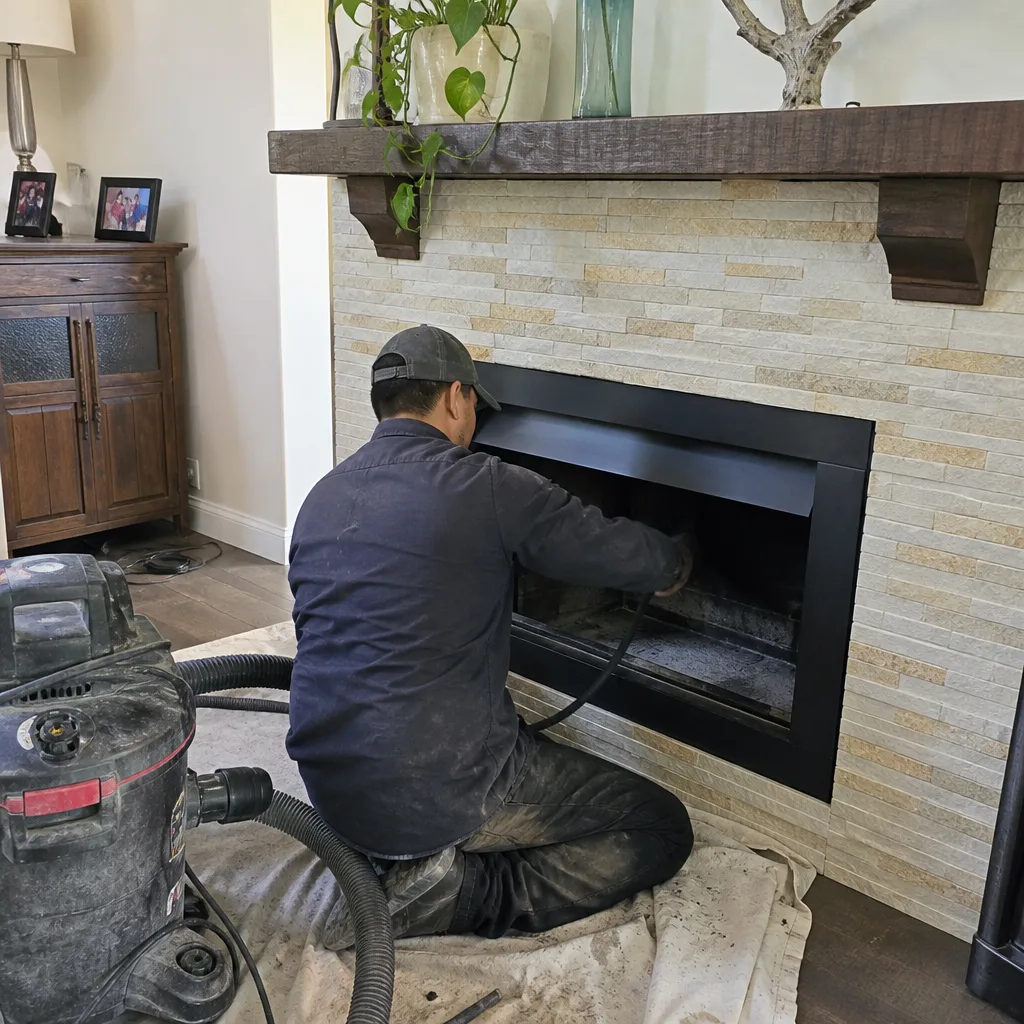
Vacuum-and-camera cleaning, also called a rotary or HEPA-vacuum sweep, pairs a specialized rotary whip or brush head with a high-volume vacuum that’s designed for soot containment, not the shop-vac that lives in your garage. The vacuum runs continuously during the cleaning, so dust doesn’t migrate into your living room. The camera runs before and after, so the sweep can show you exactly what the flue looked like and exactly what remains. This method is essential for heavier creosote, glazed deposits, or flues that haven’t been swept in more than three years.
Which does your Almaden chimney need? That depends on three factors:
- How long since the last sweep. Under two years, a rod-and-brush may suffice. Over three years, we strongly recommend a camera-and-vacuum approach because the deposits have hardened and need verification.
- What you burn. Oak burns cleaner than softwood. But unseasoned wood, manufactured logs, or anything treated produces denser, stickier creosote that a basic brush can miss.
- The flue’s condition. If your chimney has a damaged liner, aggressive brushing can make the damage worse. A camera inspection before cleaning tells the technician what’s safe.
For Almaden’s climate, which we’ve established produces faster creosote accumulation, we default to the vacuum-and-camera method on any flue that hasn’t been documented recently. It costs a bit more. It also tells you the truth about your chimney, and in a valley where clay liners crack and shift, that truth is worth the difference.
Aging Clay Tile Flues in Almaden’s 1960s-80s Tract Homes
Walk through the neighborhoods east of Almaden Expressway, the streets around Bret Harte Middle School, or the subdivisions off Coleman Road, and you’ll see a lot of chimneys built the same way: wood-frame construction, masonry fireplace facade, and a squared clay tile flue liner running up the center. These homes were built in the 1960s through the 1980s, a period when terracotta clay liners were the default choice. Clay was affordable, fire-resistant, and at the time, considered perfectly adequate. But clay has a predictable lifespan, and most of those original liners are now 40 to 60 years old.
Here’s what we see, decade by decade, in original Almaden tract homes:
- Years 0-20: The flue performs as designed. Any issues are usually from construction defects, not aging.
- Years 20-30: Hairline cracks begin appearing at the mortar joints between clay tiles. These are invisible from the hearth and usually harmless at this stage, though they’re starting points for moisture intrusion.
- Years 30-40: Cracks widen as the surrounding clay soil shifts the home’s foundation. Water gets in, freezes during rare cold snaps, and expands the damage. Creosote begins packing into the gaps.
- Years 40-50: Individual clay tiles can spall, meaning pieces chip off the liner’s interior face. The flue may still function, but the surface is no longer smooth, and creosote accumulates faster in the rough areas.
- Years 50+: This is when we most often recommend a reline. The clay has deteriorated past the point of safe use, and the original liner was not designed to be repaired piece-by-piece.
If your home falls into the 40-plus-year bracket and you’ve never seen the inside of your flue on camera, you should not assume it’s fine. The previous owner may have said the chimney was “recently inspected,” but that inspection may have been limited to a Level 1 visual done from the firebox, which cannot see the upper two-thirds of the flue. For Almaden homes this age, we use a camera before recommending anything beyond a standard clean, and we use it before cleaning too, because brushing a compromised liner can finish what decades of thermal cycling started.
When a clay liner has failed, the repair options are limited. You can’t patch clay effectively. A stainless liner, often a DuraFlex flexible system, is typically the right answer: it’s designed to be dropped into an existing flue and is a professional-grade standard in chimney relining. In some cases, a HeatShield resurfacing application can restore a flue that’s cracked but not collapsed. The point is that the solution should be selected based on what the camera shows, not what a salesperson wants to sell.
What the Sweep Actually Does: Step-by-Step Sequence
Most guides describe a chimney sweep as “brushing the inside of your flue.” That’s accurate but incomplete. The sequence matters because each step builds on the previous one. Here’s what a professional sweep looks like when it’s done properly in an Almaden home:
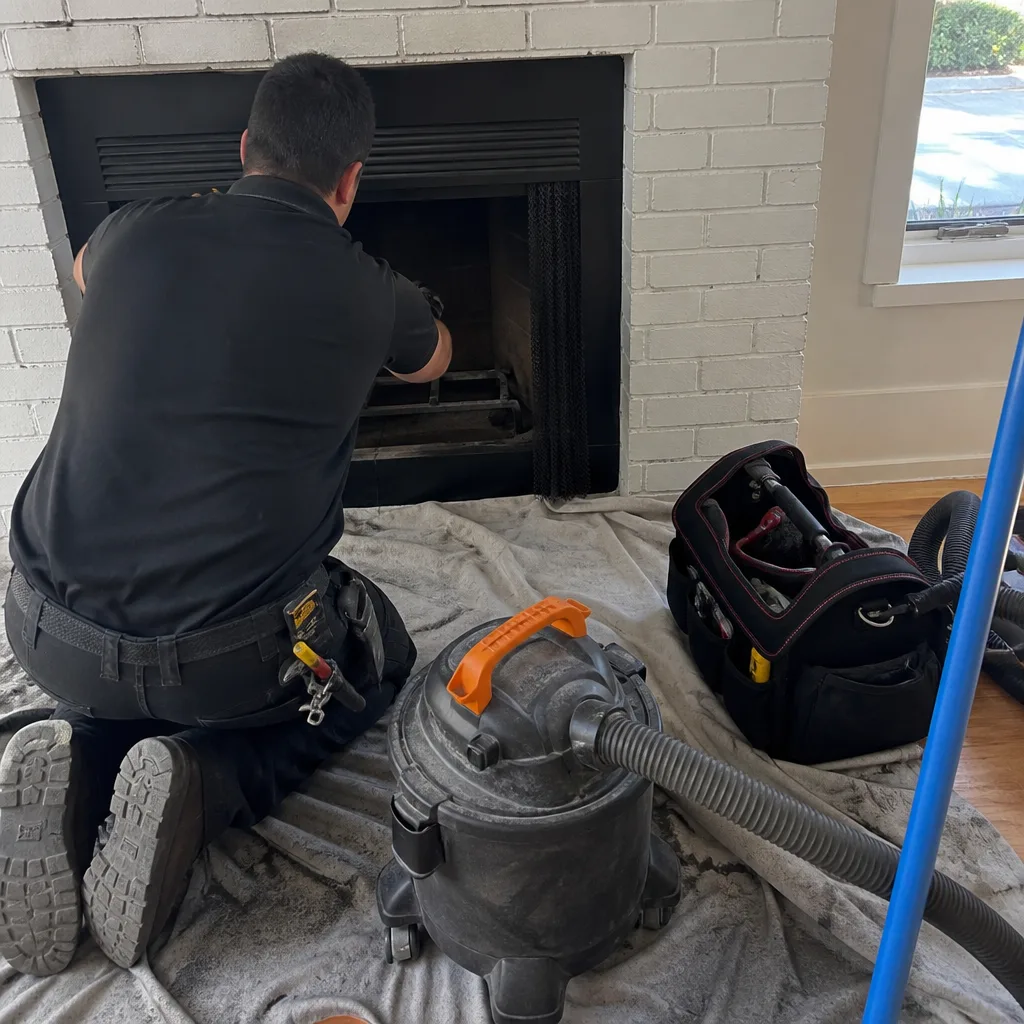
- Site assessment and drop-cloth setup. The technician walks the property, checks roof access, and confirms the fireplace has been cold for at least 24 hours. Drop cloths go down around the hearth, and a HEPA vacuum is positioned at the firebox opening.
- Pre-cleaning camera inspection. The flue is scoped from the bottom up or top down. This identifies the liner material, measures the flue’s dimensions for proper brush sizing, and documents the starting condition, including any cracks, obstructions, or birds’ nests that might not be visible from the ground.
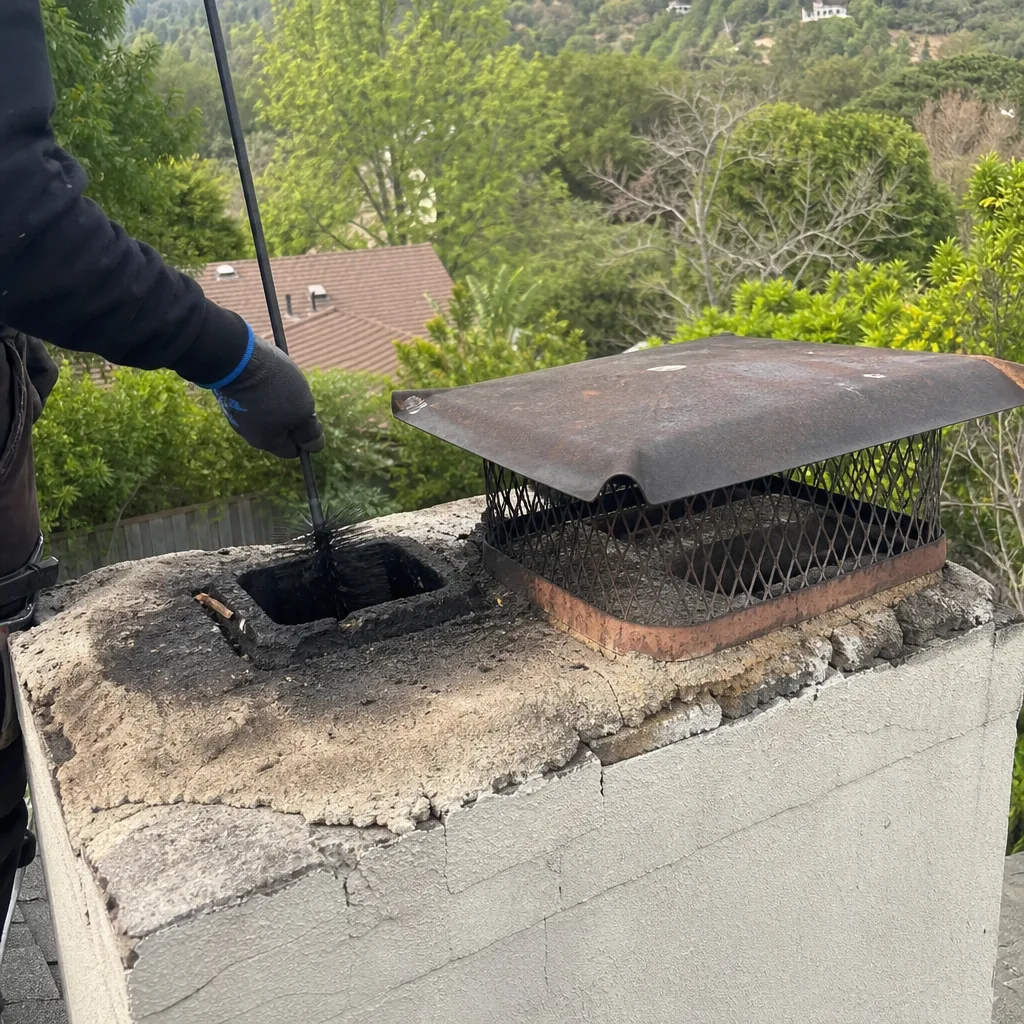
- Top-down brushing. Using rods and a brush sized to your flue, the sweep scrubs from the roofline down to the firebox, or in some cases bottom-up. The direction depends on roof access, flue type, and the sweep’s preference. Creosote and soot drop into the firebox area, where the vacuum captures them.
- Firebox and damper cleaning. The firebox floor, walls, and damper mechanism are brushed and vacuumed. The damper is checked for full range of motion and a proper seal when closed.
- Smoke shelf and smoke chamber attention. This is the step that separates a thorough sweep from a quick one. The smoke chamber, the angled area above the damper, pulls creosote out of the smoke stream and holds it. Many sweeps skip it because it’s awkward to reach. It’s also a common source of chimney odors between fires.
- Post-cleaning camera inspection. The flue is scoped again. The technician confirms the brushing removed the intended material and looks for damage that may have been hidden by soot. This is the moment when liner cracks, spalling, or missing mortar become visible.
- Debrief and report. You get a verbal walk-through of what was found, photos or footage if the technician captured them, and a written report that documents the flue’s condition, what was removed, and any recommendations. You should leave the appointment knowing exactly what condition your chimney is in, not just that it’s “clean.”
Notice what didn’t happen: no one tried to sell you a liner based on a look from the firebox. No one scraped the smoke chamber with a hand tool and called it done. No one left dust on your mantle. Those are the shortcuts to watch for.
Before the Sweep Arrives: How to Prepare
A little preparation makes the appointment faster, less disruptive to your home, and more accurate. Here’s what to do in the 24 hours before your sweep arrives:
- Stop using the fireplace. The chimney needs to be fully cold before the sweep can safely begin. A warm flue can also cause creosote to smear rather than flake off, making the cleaning less effective.
- Clear the area around the hearth. Move furniture, rugs, decor, or anything within six feet of the firebox opening. The sweep needs room to work, lay down cloths, and position the vacuum.
- Remove small items from the mantle. Vibrations from brushing transmit through the chimney and can knock things off shelves and mantles.
- Lock up pets. A dog that wants to inspect the strange new visitor with a vacuum will add time to the appointment and stress to everyone involved.
- Know your home’s roof access. If the sweep will go on the roof, confirm that gates are unlocked and any dogs are in. If there’s a known roof access issue, a tree limb, a steep pitch, a brittle tile roof, let the company know when you book. That changes the plan.
- Have your questions ready. The time to ask about odd smoke odors, a damper that won’t close, or a family of raccoons you heard last spring is during the appointment, not after.
For a detailed comparison of what a sweep involves versus a repair, our Chimney Sweep Almaden home page walks through our full process.
What a Chimney Sweep Costs in Almaden: Real Numbers
Chimney sweep pricing in Almaden reflects the same variables you’d see across the Bay Area, with a couple of local twists. Here are the actual ranges we quote in this market, based on the work our team performs:
| Service | Typical Almaden Price Range | What Affects the Price |
|---|---|---|
| Standard Level 1 sweep (single flue, wood-burning) | $189 – $289 | Flue height, roof access difficulty, time since last sweep |
| Sweep with camera inspection (Level 2) | $299 – $449 | Whether we’re scoping an original clay flue, liner material, number of flues |
| Rotary/vacuum sweep for heavy creosote | $329 – $499 | Severity of glaze, extra brushing time, disposal volume |
| Gas fireplace sweep and inspection | $159 – $249 | Direct-vent vs. B-vent, access to the termination cap |
| Dryer vent cleaning (with chimney sweep) | $99 – $149 | Vent length, number of elbows, whether the vent terminates on the roof or a wall |
| Clay liner camera-only inspection | $149 – $199 | Standalone or bundled with the sweep |
Those are the prices for the sweep itself. If the inspection reveals damage, the repair conversation is separate, and it should be backed by footage. A stainless reline with a professional-grade system like DuraFlex typically runs $2,500 to $5,000 in Almaden depending on flue height and access. HeatShield resurfacing, when the liner is cracked but structurally intact, costs less and is worth asking about before committing to a full reline. Any quote you receive should reference specific materials and specific methods, not vague “repairs.”
For a more detailed look at how those repair prices break down, see our chimney repair pricing guide. And if you want to understand what a dryer vent clean involves separately, our dryer vent cleaning service page covers it step by step.
Common Mistakes to Avoid
- Assuming the previous owner maintained the chimney. In Almaden, many homes have changed hands two or three times since the 1970s, and the chimney is the last system anyone checks at closing. To a general home inspector, a chimney is a visual pass/fail, not a camera inspection.
- Burning unseasoned wood during Spare the Air gaps. When the burn ban lifts, the temptation is to load the fireplace with whatever’s handy. Unseasoned wood produces wet, heavy smoke that cools fast in Almaden’s low-wind basin and turns to creosote quickly.
- Ignoring a smokey smell you only notice on humid days. That smell is usually the smoke chamber or firebox releasing trapped residue when moisture changes the air pressure in the house. It’s not “the chimney being old”; it’s a signal that the chamber hasn’t been cleaned properly.
- Choosing a sweep on price alone. The difference between a $149 coupon sweep and a $289 professional sweep is usually a camera, a HEPA vacuum, and a full smoke chamber cleaning. The cheap one costs what it costs for a reason.
- Believing gas fireplaces never need service. Gas burns clean, but gas fireplaces still draw air through the flue, and that air carries dust, spider webs, and in Almaden’s older homes, degrading mortar. A gas flue can still obstruct.
- Treating the dryer vent as optional. Your fireplace and your dryer vent are both fire risks, and they’re both covered by the same specialist. A clogged dryer vent is the leading cause of residential dryer fires per the NFPA, and Almaden’s older homes often have longer-than-code vent runs that clog faster.
- Waiting until you see a problem. By the time creosote becomes visible at the firebox, flue cracks become visible from the roof, or smoke starts backing into the room, the issue has been developing for years. The sweep exists to catch the problem before there’s a symptom.
When to Call a Professional
Call for a sweep if you’ve burned wood in the last 12 months without one, if you’ve never seen the inside of your flue on camera, if you smell smoke when the fireplace is cold, if you’re buying or selling a home in Almaden, if you’ve heard animals in the chimney, or if your fireplace has developed a noise you can’t explain. Call sooner if you notice crumbling mortar at the chimney cap, water staining on the ceiling near the fireplace, or a haze that forms near the ceiling when you burn. These are not normal fireplace quirks. Chimney Sweep Almaden offers free estimates in Almaden, and we’ll tell you plainly if what you’re seeing is a real problem or not. Call (833) 593-6691.
Frequently Asked Questions
Wood-burning fireplaces in Almaden should be swept every 12 months if used regularly during burn season, because the valley’s low-wind basin causes faster creosote accumulation than in windier parts of the Bay Area. Gas fireplaces can typically go two to three years between cleanings. Call (833) 593-6691 to schedule your annual sweep.
A standard Level 1 sweep in Almaden costs between $189 and $289, while a sweep with a full camera inspection ranges from $299 to $449 depending on flue height and condition. Heavy creosote removal with rotary equipment runs $329 to $499. Estimates are free.
A Level 1 inspection is a visual check of accessible chimney surfaces, while a Level 2 adds a camera scan of the flue interior and an inspection of the attic and crawlspace where the chimney passes through. You need a Level 2 when something has changed: recent home purchase, new fuel type, or a chimney fire.
You need a new liner if the camera footage shows cracks, spalling, or gaps that expose combustible materials to heat and combustion gases, not because a technician says so without visual proof. Ask to see the footage before approving anything. In many Almaden homes with original 1960s-80s clay liners, the damage is real and visible.
Creosote accumulates, and because creosote ignites at around 451°F, a hot fire can light the deposits that have built up on your flue walls, producing a chimney fire that can reach 2,000°F and crack the liner, melt the mortar, and communicate heat to the home’s framing. The damage can also happen silently: a cracked liner that goes undetected for years can vent combustion gases into wall cavities instead of outdoors. A sweep costs less than the deductible on most homeowner policies. Call (833) 593-6691 to get your chimney inspected.
Yes, and it makes sense to combine them because both services require similar equipment: high-volume vacuums, long-reach rotary brushes, and roof access in many Almaden homes. Since your fireplace and your dryer vent are both fire risks, having them both cleaned by the same specialist in one visit is efficient. Chimney Sweep Almaden offers both services in one appointment.
The Bottom Line
A chimney sweep in Almaden isn’t a generic maintenance chore. It’s a process shaped by the valley’s inversion layer, older housing stock, clay tile flues that age on a predictable schedule, and the BAAQMD burn restrictions that interrupt how you use the fireplace. The sweep itself should be a documented, sequenced operation: camera before, brushing during, camera after, and an honest report at the end. The price ranges from about $189 to $449 depending on what your flue needs, and any repair recommendation should come with footage you can see for yourself. If you haven’t had your chimney inspected recently, call (833) 593-6691 for a free estimate, or explore more guides & resources to learn what your chimney needs.
Written by the team at Chimney Sweep Almaden, serving Almaden since 2017.
See the difference
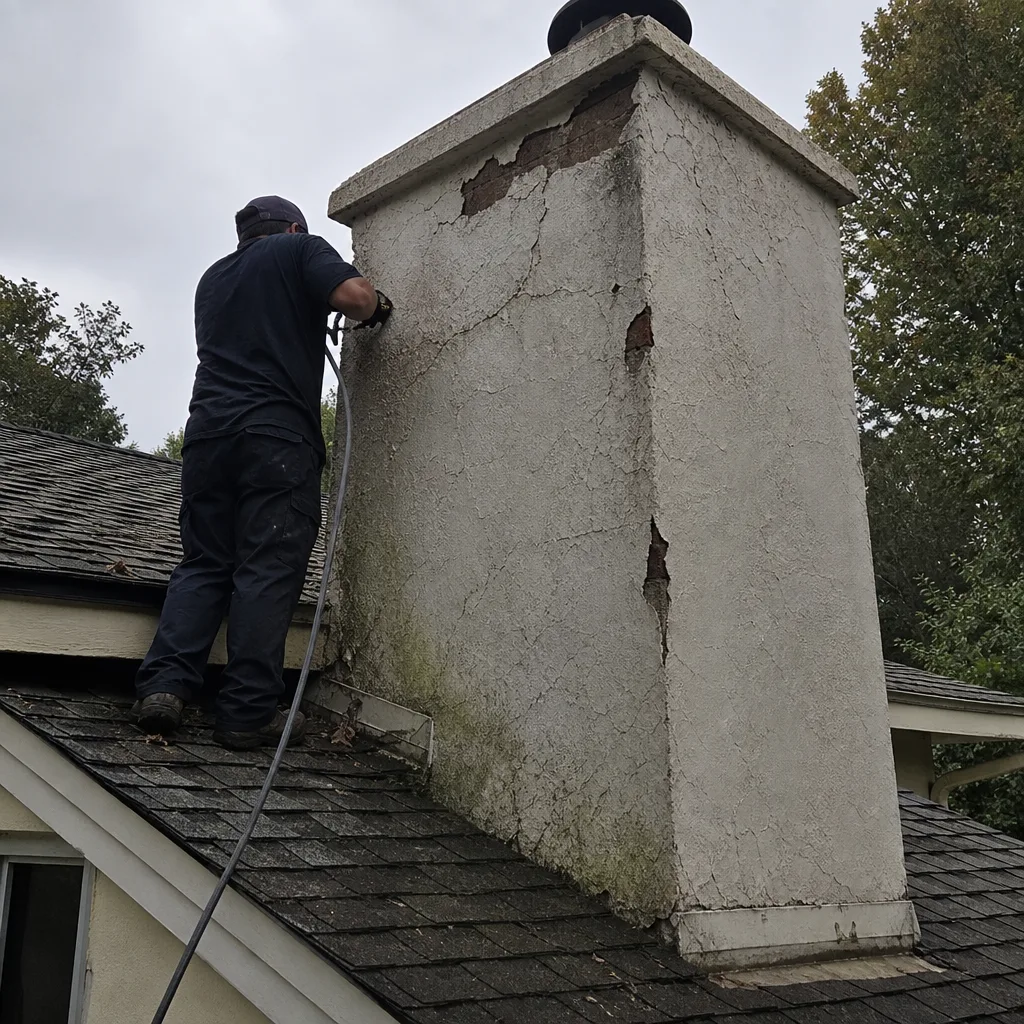 Before
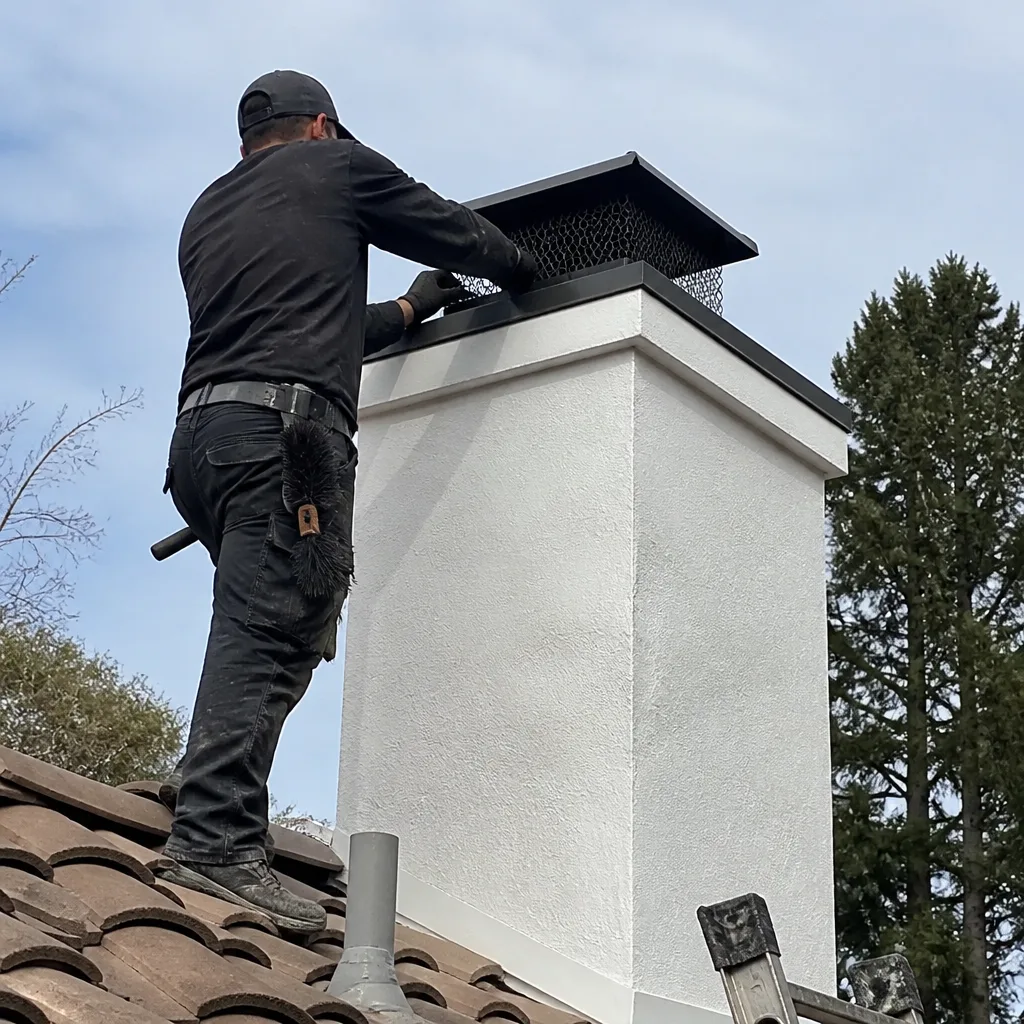 After
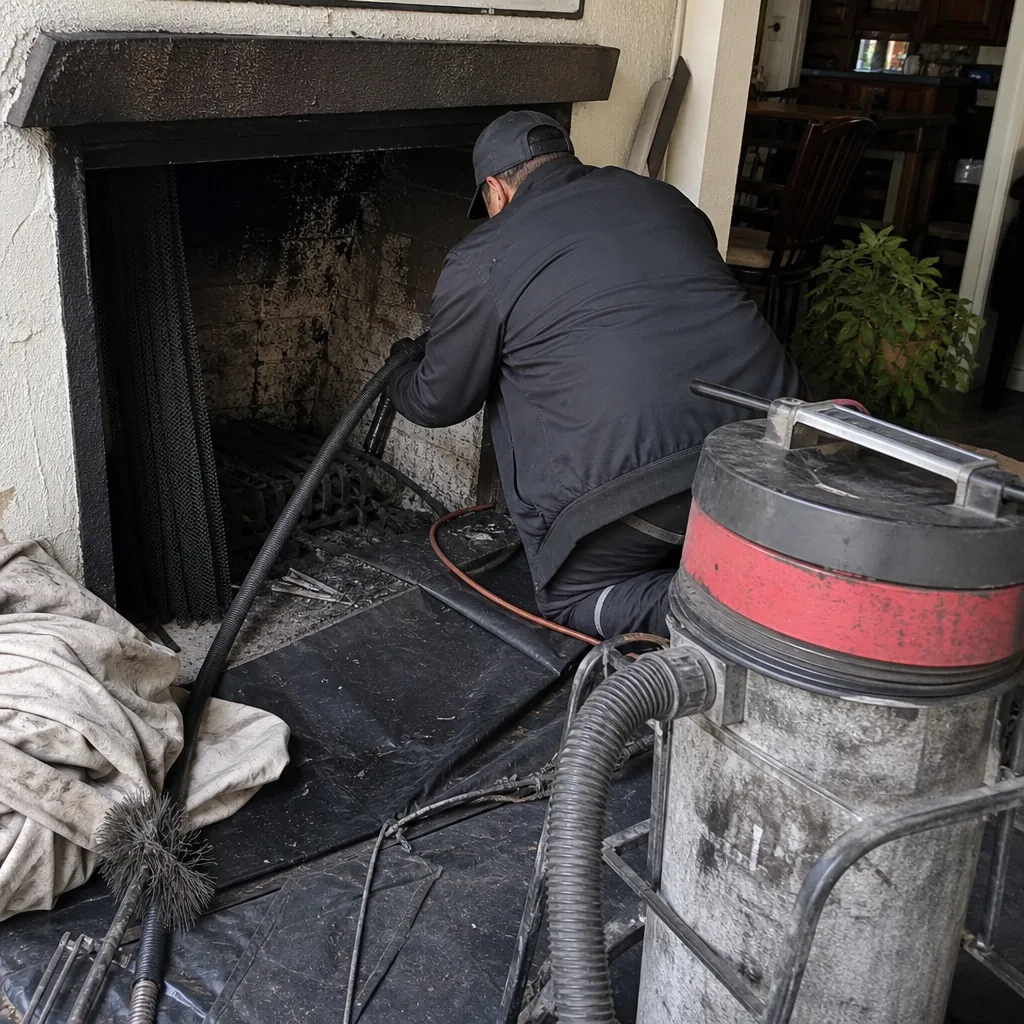 Before
 After
 Before
 After