
Last updated November 2, 2026
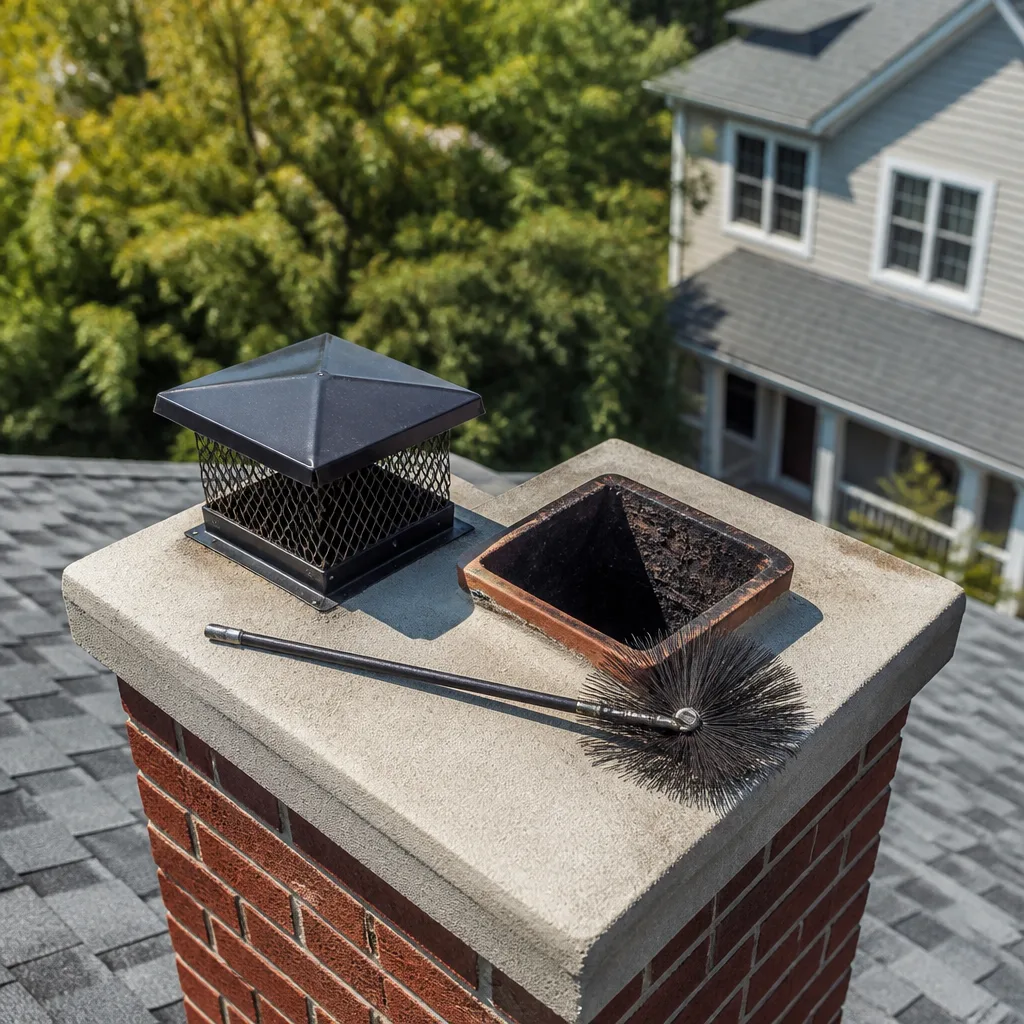 Sweep & inspection
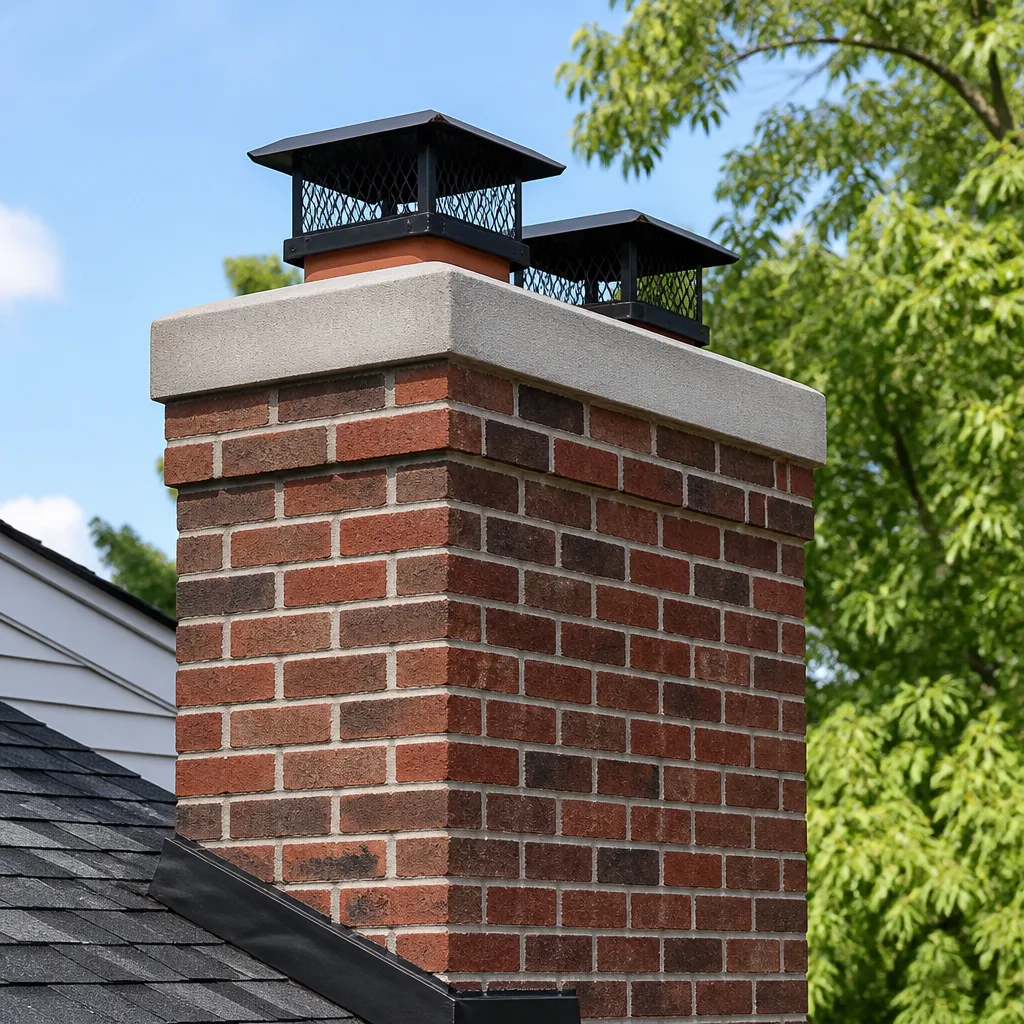 Caps & crowns
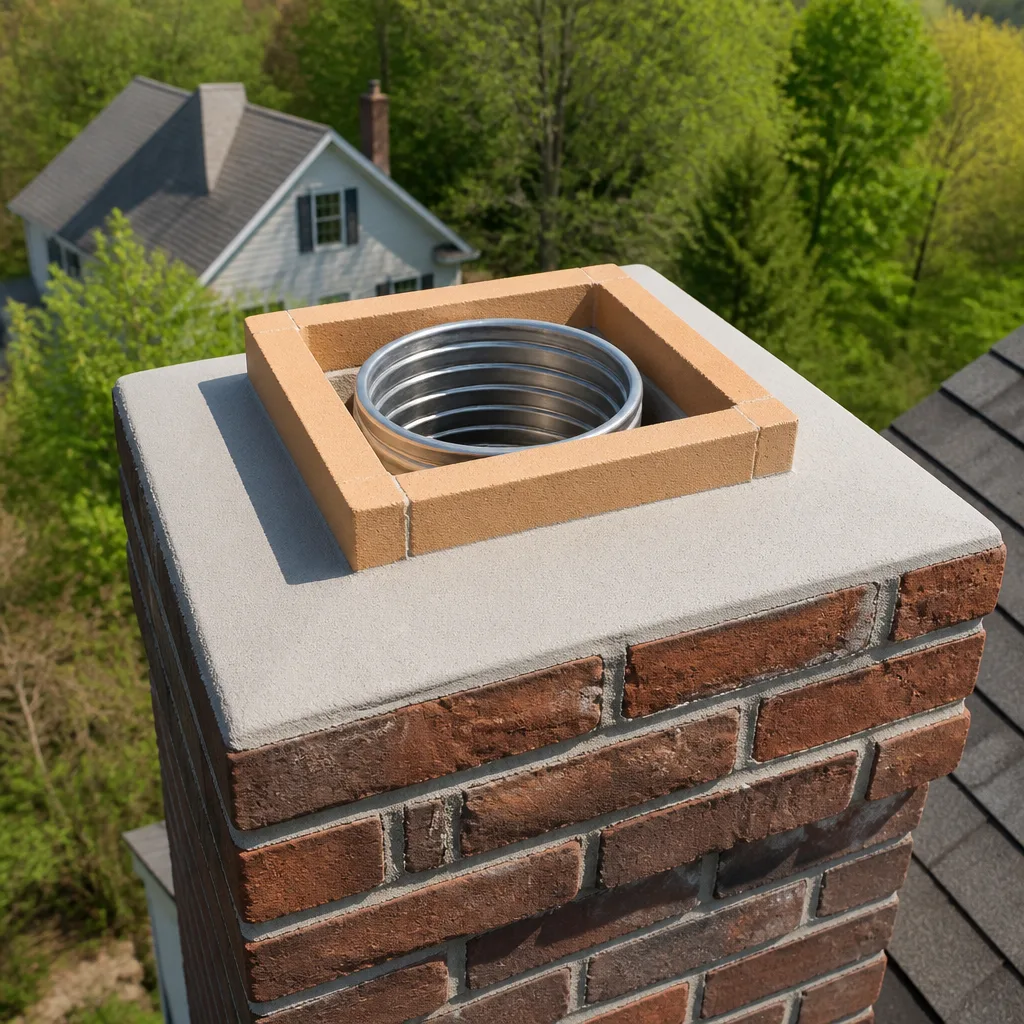 Flue relining
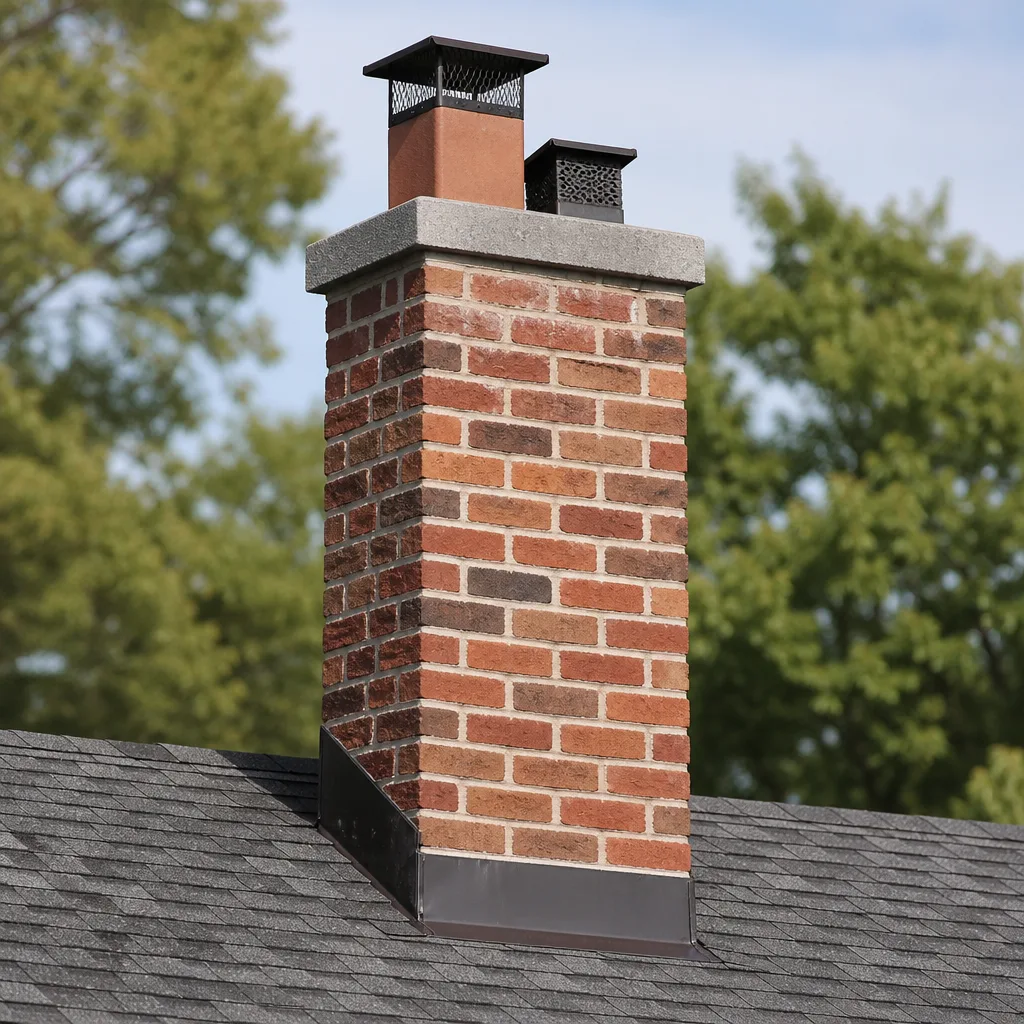 Masonry repair
 Gas fireplace service
Level 1 sweep and inspection to the NFPA 211 annual standard - flue, crown, cap, and flashing checked and photographed
Chimney sweep logs do not sweep chimneys. They loosen some creosote - which then falls where a brush and vacuum still have to collect it.
Chimney Cleaning Emergency Preparedness Guide for Almaden Homes
A chimney fire sounds like a low rumble at first. Many Almaden homeowners describe it as wind moving through the attic, or a distant train. By the time it reaches the roar people associate with disaster, the fire has usually been burning for several minutes. This guide covers what actually happens in the first five minutes of a chimney emergency, why those minutes determine whether you have a scare or a structure fire, and what preparation actually works. For chimney cleaning warning signs every Almaden homeowner should know, see our dedicated reference. We’ll walk through identifying a chimney fire in progress, the correct action sequence, carbon monoxide risks specific to Almaden floor plans, and the post-incident steps that keep your home insurable and code-compliant.
Quick Answer
Chimney emergency preparedness for Almaden homes means three things: knowing what a chimney fire actually sounds and smells like, having working carbon monoxide detectors placed correctly for your floor plan, and knowing the immediate action sequence before instinct takes over. If you hear a low rumble like a freight train coming from your chimney, see heavy dark smoke or flames at the chimney cap, or smell hot acrid tar, get everyone out, call 911, and close the damper only if you can do so without reaching near the fireplace opening. After any chimney fire, California code requires a Level 2 inspection before the fireplace is used again.
Styles & brands we work with
- Sweep & inspection
- Caps & crowns
- Flue relining
- Masonry repair
- Gas fireplace service
Table of Contents
- What a Chimney Fire Actually Sounds Like in Almaden
- The First Five Minutes: Immediate Action Sequence
- CO Detector Placement for Almaden Open Floor Plans
- After the Fire: The 24-Hour Protocol
- Pre-Season Emergency Prep
- Almaden-Specific Fire and Structural Risks
- Common Mistakes to Avoid
- When to Call a Professional
What a Chimney Fire Actually Sounds Like in Almaden
Chimney fires don’t announce themselves the way house fires do. There’s no smoke alarm triggering, no visible flame in the living room. The first cue is almost always auditory. A chimney fire in its early stage produces a low, continuous rumble that climbs in intensity. Homeowners who’ve experienced one consistently compare it to a freight train passing, a jet engine idling overhead, or strong wind funneling through a canyon. In Almaden, where evening winds off the Santa Cruz foothills are common, that wind comparison is exactly why so many residents wait too long to investigate.
The smell is the second cue. A chimney fire produces a hot, acrid odor distinct from normal wood smoke. It’s sharper, more chemical, sometimes described as burning tar or melting plastic. This smell often appears before the sound becomes unmistakable. If you smell something from your fireplace that doesn’t match the wood you’re burning, treat it as an active problem until proven otherwise.
Visual cues matter less because you rarely get a clear view. But if you step outside and see thick dark smoke pouring from the chimney cap, or flames licking above the cap, the fire is already advanced. Lighter smoke with a white or gray color is normal during startup. The change to dark, dense smoke signals creosote is involved.
Why Almaden Chimneys Burn in the First Place
Creosote builds up in every wood-burning chimney. It’s a byproduct of incomplete combustion, and it condenses on the flue walls every time you burn. In Almaden, the pattern we see is consistent: homeowners burn primarily in winter, then let the chimney sit through the warm months. That idle period allows creosote to harden. When burning resumes in November, the first few hot fires can ignite that accumulation. The fire doesn’t need to be dramatic. A routine evening fire can produce enough heat to ignite a creosote deposit that’s been building for a season or two.
Gas fireplaces have their own failure modes. A gas chimney fire is rarer but not impossible. More common are carbon monoxide events caused by blocked vents, failed gaskets, or improper installation. We’ll get to those.
The First Five Minutes: Immediate Action Sequence
Your instincts in an emergency are shaped by normal house fire training: get water, open windows, grab the fire extinguisher. For a chimney fire, several of those instincts make the situation worse. Here is the correct sequence, in order.
- Call 911 immediately. Do not wait to confirm what you’re hearing. A chimney fire can spread into the attic or wall framing in minutes. The fire department responds to chimney fire calls routinely and will not consider it an overreaction.
- Get everyone out of the house. This includes pets. Don’t stop to gather belongings. Chimney fires can breach the chase and enter living spaces faster than most people expect.
- Close the damper only if you can do so without reaching into or near the firebox. Cutting off the air supply slows the fire. But if the damper handle is hot, or closing it requires reaching toward the opening, skip this step. No fire is worth a burn injury.
- Close glass fireplace doors if your unit has them. Again, only if you can do so safely at arm’s length.
- Do not use water. Throwing water into a hot chimney can crack the flue liner, turn creosote into a steam explosion, and send burning material into the room. Water in a masonry chimney can also cause thermal shock that compromises the structure permanently.
- Do not try to extinguish it from the roof. This is how people end up in the emergency room with burns and falls. The fire department has the training and equipment for this.
- Wait outside for the fire department, and keep family members away from the exterior wall containing the chimney. Heat transfer through the chase can ignite nearby framing.
The pattern that matters: call first, evacuate, then take only the safest actions. Every second of delay between recognizing the sound and calling for help is a second the fire uses to grow.
CO Detector Placement for Almaden Open Floor Plans
Carbon monoxide poisoning from fireplaces and vents follows a familiar pattern in Almaden. Homes here skew toward open floor plans, especially the newer builds and remodels common throughout the 95120 corridor and up toward the foothills. Open floor plans are beautiful and bright, but they mean carbon monoxide from a malfunctioning fireplace or blocked vent has a clear, unobstructed path through the main living space.
Where you place CO detectors changes how much warning you get.
- Install a CO detector on every level of the home. At minimum, one per floor. In a two-story Almaden home with bedrooms upstairs, that means one upstairs and one downstairs.
- Place one detector within 15 feet of any gas fireplace or gas appliance. But not directly above it. CO rises with warm air, but a detector mounted flush against the ceiling directly above a gas fireplace will false-alarm from normal combustion gases.
- Place detectors near sleeping areas. CO is a silent killer because it works while you sleep. A detector in the hallway outside bedrooms is the difference between waking up and not waking up.
- For open floor plans specifically: place one detector in the central living space, not in a corner. Corners trap still air. An open central location samples air that actually moves through the room.
- Do not place CO detectors in the fireplace alcove itself, inside cabinets, behind furniture, or near windows and doors. Drafts and dead air zones produce false readings or delayed detection.
Gas Fireplace CO Risks Specific to Almaden
Gas fireplaces produce carbon monoxide when combustion is incomplete or venting is blocked. A properly operating gas fireplace sends combustion byproducts up the flue. When the flue is blocked by debris, a bird nest, or a failed cap, those gases spill back into the living space. In Almaden, we see bird and squirrel activity in chimneys year-round. The foothills and mature tree canopy mean more wildlife pressure than you’d find in the flatlands downtown.
Venting failures are another issue. Gas fireplace vents corrode over time, especially in homes where the fireplace is original to the build and now 20 to 30 years old. A corroded vent leaks CO into wall cavities, where it migrates through the house. The first symptom is often not a headache (the classic CO warning). It’s a detector going off at 2 a.m., or a family member feeling nauseous in the morning. By then, levels have been elevated for hours.
If your CO detector goes off and you have any reason to suspect the fireplace or dryer vent as the source, vacate the house and call the gas company or fire department. Do not reopen the fireplace until a professional has inspected it. This is also where a dedicated dryer vent cleaning matters. Lint-blocked dryer vents are a fire risk first, but they can also push carbon monoxide from gas dryers back into the home when exhaust can’t escape.
After the Fire: The 24-Hour Protocol
Once the fire department clears the scene and confirms the chimney fire is out, you enter the phase most Almaden homeowners never think about until they’re in it: the insurance, documentation, and inspection sequence that determines whether your home is safe to occupy and whether your claim gets paid.
What to Do Before the Fire Department Leaves
Ask the responding crew to document what they observed. This matters more than most people realize. Firefighters will note whether the fire was contained to the flue, whether it extended into the chase, and whether they had to open any walls or ceilings. That information goes into the incident report, and your insurance adjuster will request a copy. The more detailed the report, the smoother the claim.
Take your own photos. Document the chimney from the outside, the fireplace from the inside, and any water damage from firefighting efforts. Do this even if the damage looks minor. Insurance claims expand in scope as more information surfaces, and photos you take in the first hour are irreplaceable.
Do Not Relight the Fireplace
This is the step people get wrong. After a chimney fire, the fireplace looks fine from the living room side. The firebox is intact. The damper still works. The temptation to have a fire the following week is real, especially in December when the household is in the holiday routine.
California building code requires a Level 2 inspection after any chimney fire before the fireplace is used again. This is not a recommendation or a best practice. It’s a legal requirement. See Chimney Cleaning Permits, Codes & Inspections in CA: What You Need to Know for the full regulatory picture. A Level 2 inspection includes video scanning of the flue interior to look for cracks, separated tile liners, damaged mortar joints, and areas where the fire may have compromised the structure. The fire may have burned at 2,000 degrees Fahrenheit inside the flue. Masonry that survives that heat can be weakened in ways invisible from the outside.
In our experience, Almaden homes that skip the Level 2 inspection after a chimney fire are the ones we see for chimney repair a year later, usually with damage that was preventable. The second fire is always worse because the chimney is already compromised.
Documenting for Insurance Adjusters
Insurance adjusters are not chimney specialists. They are generalists who evaluate claims based on whatever documentation you provide. The more precise you are, the better the outcome.
Get the inspection report in writing. A thorough inspection report will note the extent of creosote damage, any cracked flue sections, and whether the fire reached the chimney chase or attic. The report should be in language an adjuster can understand: specific damage locations, specific materials affected, specific recommended repairs. Vague language like “chimney needs work” produces denied or reduced claims.
If the inspection reveals damage that requires relining, the report should specify the product. A flue relined with DuraFlex, for example, is a defined scope of work the adjuster can price against industry standards. The same applies to resurfacing with HeatShield when the damage allows it. Specific products, specific measurements, specific repair scope. That’s what moves claims forward.
Keep every receipt and document every phone call. Date, time, who you spoke with, what was said. Insurance adjusters move faster when the homeowner demonstrates organized documentation.
Pre-Season Emergency Prep
The best emergency is the one that never happens. Pre-season preparation in Almaden works because burn season starts predictably after the first real cold snap, usually in late October or early November. That gives you a clear window: September and October are the months to prepare. Our Chimney Sweep Maintenance Checklist for Almaden Homeowners covers exactly what to check before that first fire.
- Schedule the annual chimney sweep before the first fire, not after. Creosote that’s been building through the previous season is what ignites on that first cold evening. A sweep removes the fuel before it can ignite.
- Check the chimney cap and spark arrestor screens. Almaden’s mature trees mean more leaves, more debris, and more animals in chimneys. A damaged cap screen lets embers escape onto the roof and lets wildlife in. Both are preventable failures.
- Replace CO and smoke detector batteries the same week you schedule the sweep. Pick a date and make it an annual event. The first Sunday in October works well for most households.
- Verify the damper opens and closes freely. A stuck damper is a smoke problem waiting to happen. If it’s stiff or rusted, get it looked at before the season starts.
- Know your sweep’s emergency contact policy. Most sweeps, including us, do not run 24/7 emergency lines. If you have a chimney fire, call 911, not your sweep. But knowing who you’ll call for the Level 2 inspection afterward saves time, and asking about estimated wait times for post-fire inspections in September gives you a realistic picture before you need it.
- Clear the area around the fireplace before the first fire. Furniture, rugs, and decorations within three feet of the firebox are ignition sources. This is the simplest prevention step and the one most often skipped after a summer of rearranging furniture.
Almaden-Specific Fire and Structural Risks
Almaden has a different risk profile than other parts of San Jose, and it’s worth being explicit about why. The neighborhoods along Almaden Expressway and up toward the foothills sit against open space and wildland interface. That proximity creates two effects: higher wildlife pressure on chimneys and dryer vents, and fire season dynamics that make structural fires especially dangerous when they spread.
Birds, squirrels, and raccoons find chimneys attractive nesting sites, especially in spring and early summer. A nest blocks the flue or restricts draft, which redirects smoke and carbon monoxide into the home. In open floor plans, that gas moves through the main living space before it’s detected. The fix is a proper cap with intact screening, which is also the fix for ember escape during the fire season months when wind carries sparks.
Wind matters more in Almaden than most people realize. Evening winds off the foothills change draft behavior. A chimney that drafts fine in the morning can backdraft in the evening when the wind shifts. Backdrafting gas fireplaces push combustion gases back into the room. If your gas fireplace smells like exhaust or your CO detector spikes in the evening, the wind pattern interacting with your chimney height and cap design is the likely culprit.
Homes built in the 1970s and 1980s, which make up a large portion of Almaden’s housing stock, often have original terra cotta flue liners. Those liners crack over time. The cracks allow heat and gases to reach the chimney chase framing, which is dried, aged lumber. That’s the fire spread pathway that turns a chimney fire into a house fire.
Older homes also often have masonry that’s absorbed decades of moisture from winter rains. When that moisture-saturated masonry is exposed to a chimney fire’s heat, the water expands and can cause spalling, crumbling, or even flue collapse. The chimney may look fine from the outside and still be structurally unsound from the inside.
Gas fireplaces in Almaden present a different type of emergency: the slow, invisible one. Carbon monoxide from a blocked or corroded gas vent is undetectable without a working detector. It doesn’t smell. It doesn’t produce visible smoke. The first sign is often a detector alarm, or symptoms that get dismissed as a cold or flu. This is why CO detector placement and annual gas vent inspection matter more than the sweeping schedule for gas-only households.
Common Mistakes to Avoid
- Assuming the sound is wind. Almaden’s evening winds train homeowners to ignore low rumbling noises. If the sound seems to come from the chimney specifically, or is accompanied by a sharp acrid smell, treat it as a chimney fire until proven otherwise. The worst outcome of being wrong is mild embarrassment when the fire department arrives. The worst outcome of ignoring it is a structure fire.
- Throwing water on a chimney fire. This is the instinct people fall back on, and it creates a steam explosion that can crack the flue, spread burning creosote, and cause serious injury. The fire department has the training and equipment. Let them handle it.
- Relighting the fireplace without a Level 2 inspection. California code forbids it, and your insurance company will deny any subsequent claim if it comes out that you used the fireplace after a known chimney fire. The inspection is the documented pathway back to safe use.
- Placing CO detectors near windows or in corners. This produces false readings and delayed detection. CO detectors sample air continuously, and that air has to reach them. Dead air zones delay the alarm.
- Skipping the pre-season sweep to save money. The math doesn’t work. A sweep costs less than most insurance deductibles and dramatically reduces the risk of a chimney fire. Most chimney fires in Almaden occur in chimneys that went two or more seasons without cleaning.
- Treating the dryer vent as unrelated to chimney safety. Lint-clogged dryer vents are a leading cause of residential fires. The National Fire Protection Association documents this consistently. A home with a clean chimney and a clogged dryer vent has closed one fire pathway while leaving another wide open.
- Waiting until the fire is visible to call 911. By the time you see flames at the chimney cap, the fire has been burning for a while. The earlier you call, the more contained the response. Every minute of fire growth extends the damage and the repair scope.
When to Call a Professional
Some situations are written clearly enough that you don’t have to make a judgment call. After any chimney fire, after any CO detector activation traced to the fireplace or dryer vent, after any visible damage to the chimney cap or crown, or after any backdrafting event where smoke or exhaust entered the living space, the answer is the same: stop using the fireplace or appliance and get a professional inspection. If you hear a rumble from the chimney or smell hot acrid tar, that’s an active fire and 911 is the call, not a chimney sweep. The sweep comes after the fire department, for the inspection and repair. Chimney Sweep Almaden home is where you’ll find us, and we provide free estimates for inspections and repairs in Almaden. Call (833) 593-6691 if you have questions about what you’re seeing or hearing.
See the difference
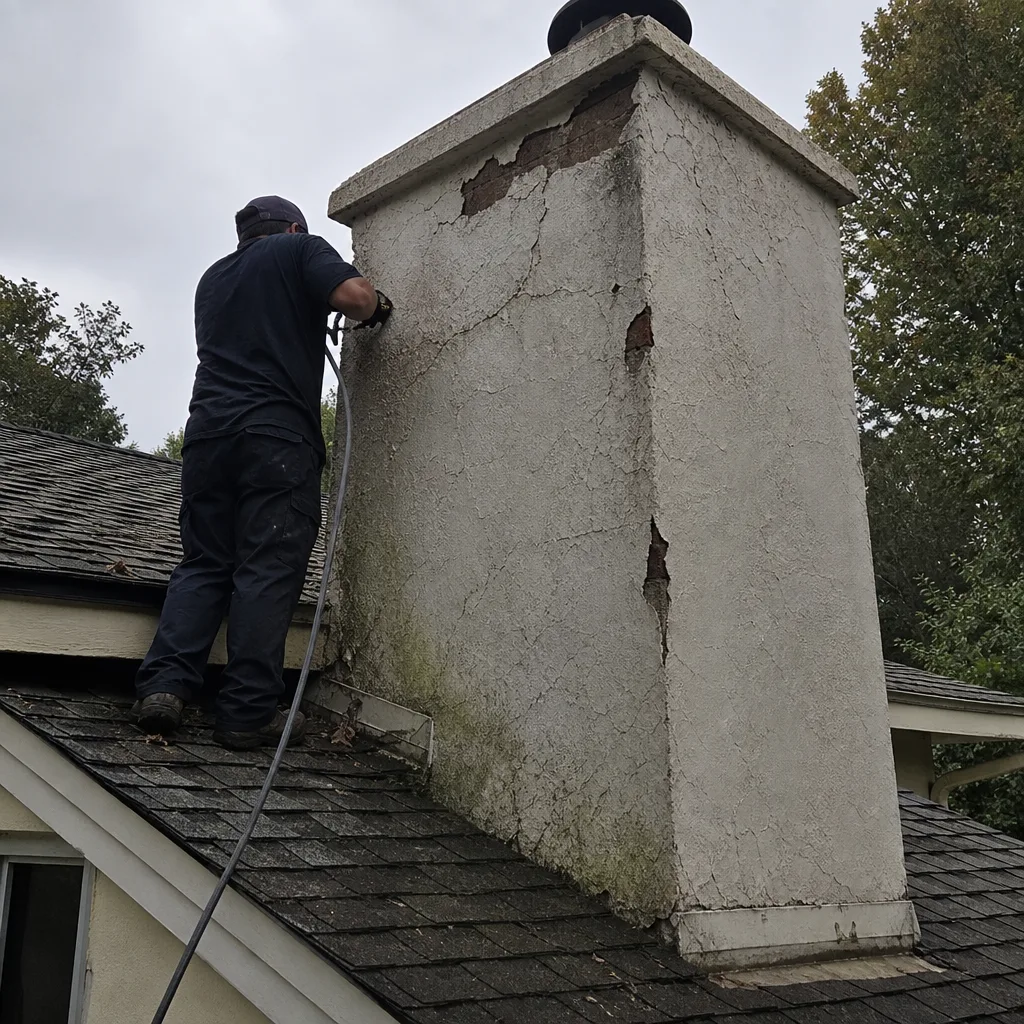 Before
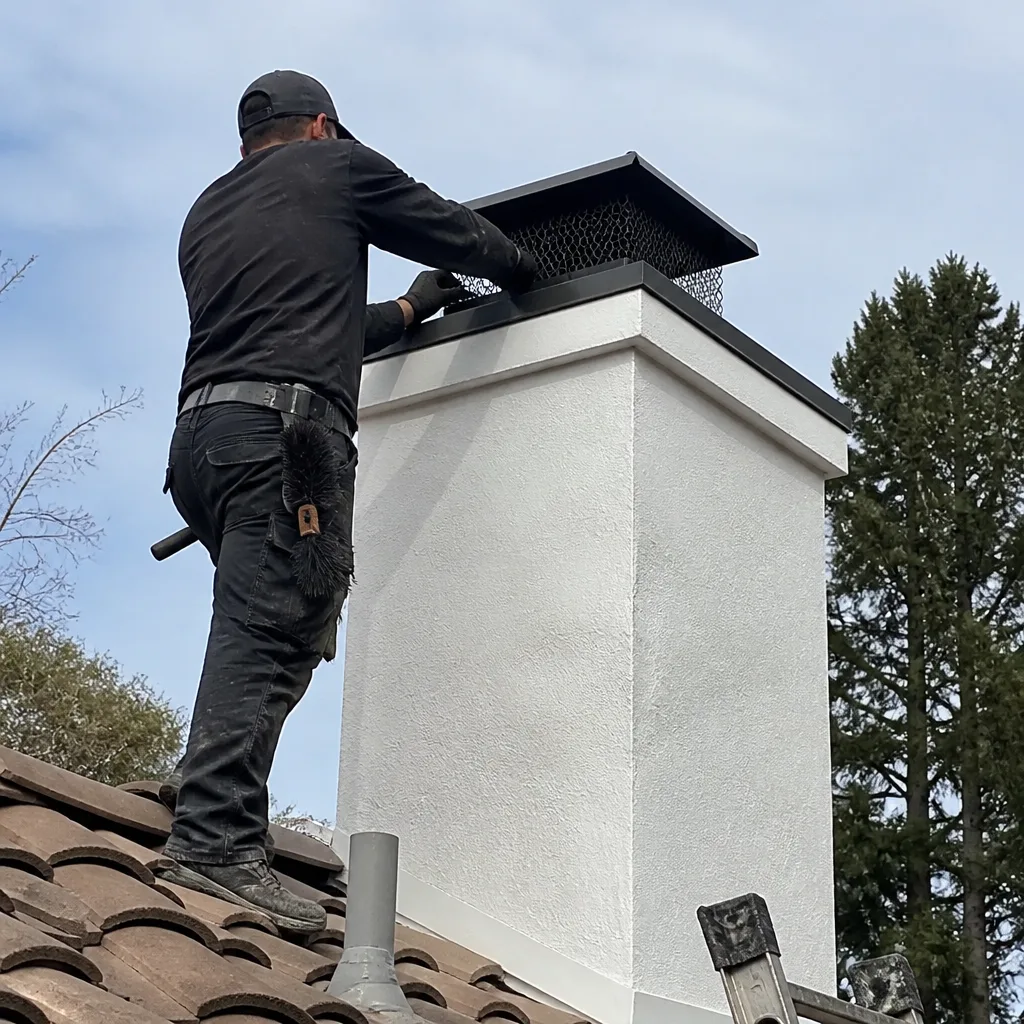 After
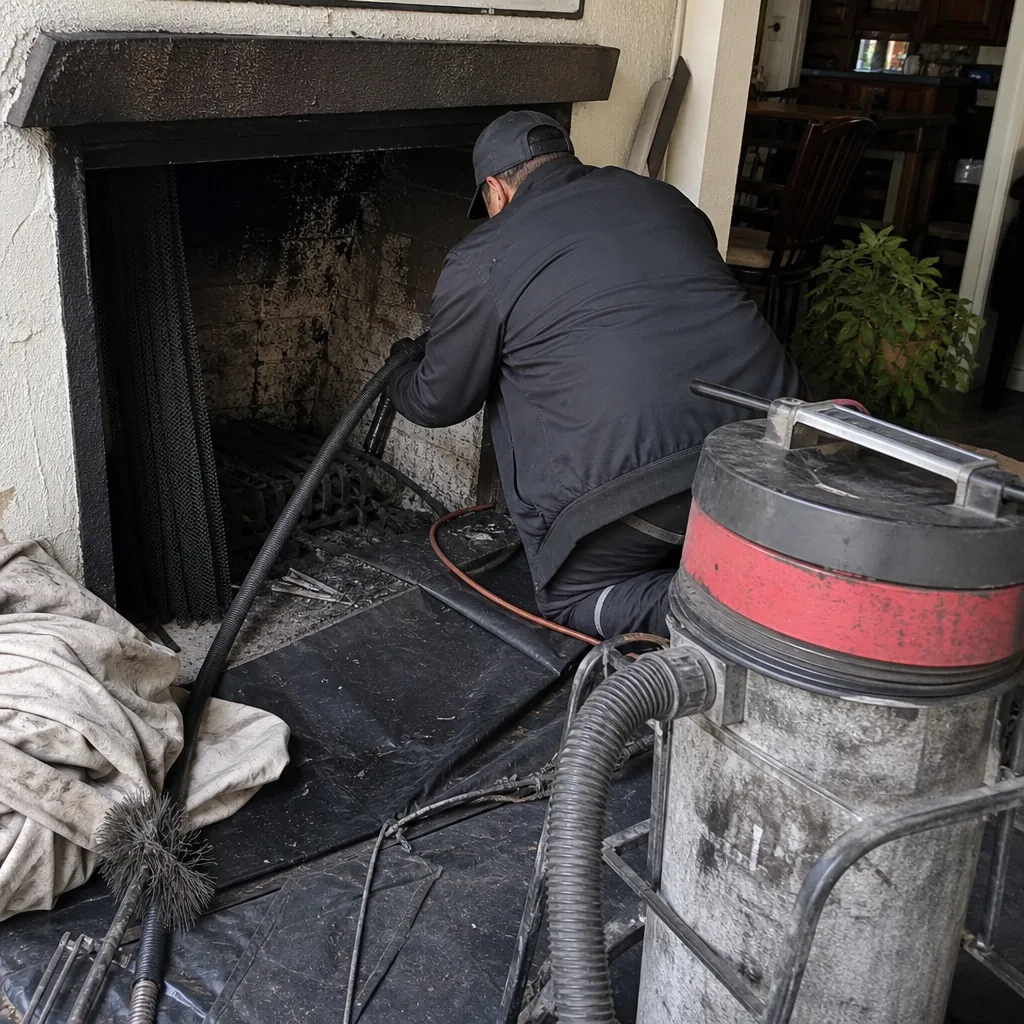 Before
 After
 Before
 After
Frequently Asked Questions
A chimney fire sounds like a low rumble that builds toward a roar, often compared to a freight train or strong wind channeling through the chimney. In two-story Almaden homes, the sound is usually louder on the second floor and in the attic. If the sound is coming specifically from the chimney and is accompanied by a hot, acrid smell, call 911 and evacuate.
A standard chimney sweep and inspection in Almaden typically runs between $180 and $340 depending on chimney height, creosote buildup, and whether any obstructions need removal. If the sweep reveals damage that requires repair, that’s quoted separately after the inspection. Call (833) 593-6691 for an exact quote for your home.
Yes. California code requires a Level 2 inspection after any chimney fire before the fireplace is used again, regardless of how minor the visible damage appears. The inspection uses video scanning to check the flue interior for cracks and weakened masonry that aren’t visible from the firebox. Skipping it risks a second, worse fire and voids insurance coverage.
At minimum once per year if you burn regularly, and ideally before the first fire of the season in October or November. Homes that burn more heavily, or that haven’t been swept in multiple years, may need two cleanings per season. Gas fireplace homes should have the venting inspected annually even though sweeping isn’t required.
Yes. Lint is highly combustible, and when it accumulates in a dryer vent, the restricted airflow allows heat to build to ignition temperature. The NFPA identifies dryer vent fires as a leading cause of residential fires. A dedicated dryer vent cleaning removes the accumulated lint and restores airflow. Dryer Vent Cleaning in Downtown San Jose covers this work for homes in the broader area.
A sweep removes creosote and debris before they become fuel. A repair addresses structural damage that already exists, whether from a fire, water intrusion, or age. After a chimney fire, a sweep is not enough because the damage may extend beyond the creosote. Chimney Repair in Downtown San Jose covers the repair scope, including relining and resurfacing work. For the initial cleaning, Chimney Sweep in Downtown San Jose is the starting point.
The Bottom Line
Chimney emergencies in Almaden follow patterns: the fire that sounds like wind, the CO leak that starts with a detector at 2 a.m., the backdrafting gas fireplace on a windy foothill evening. The homeowners who contain these incidents are the ones who recognized the signs early, called for help immediately, and followed the post-incident protocol without shortcuts. The preparation is simple: annual sweeping before the season starts, CO detectors placed correctly for your floor plan, a cap screen that’s actually intact, and a clear understanding of what the first five minutes require. Find more guides & resources on keeping your Almaden home safe year-round. You don’t need to be a chimney expert. You need to know the sound, the smell, and the right order of actions. Everything else can be handled by a professional after the emergency is over.
If you’re a homeowner in Almaden and you want to review your chimney’s current condition before burn season, Chimney Sweep Almaden home has the full scope of our services. We handle sweeping, structural repair, and dryer vent safety as one specialist, not three separate contractors. Call (833) 593-6691 to schedule a pre-season inspection or ask questions about anything you’re seeing.
Written by the team at Chimney Sweep Almaden, serving Almaden since 2017.