
Last updated November 2, 2026
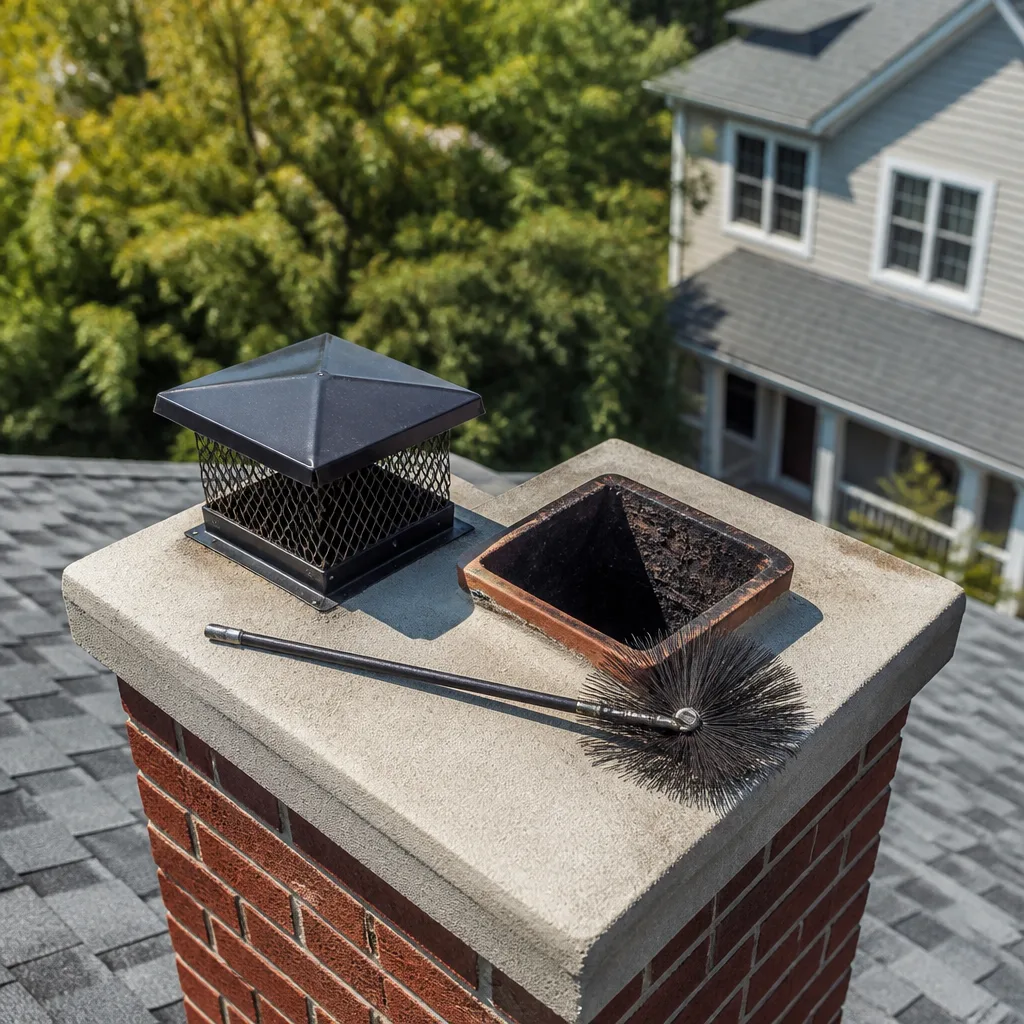 Sweep & inspection
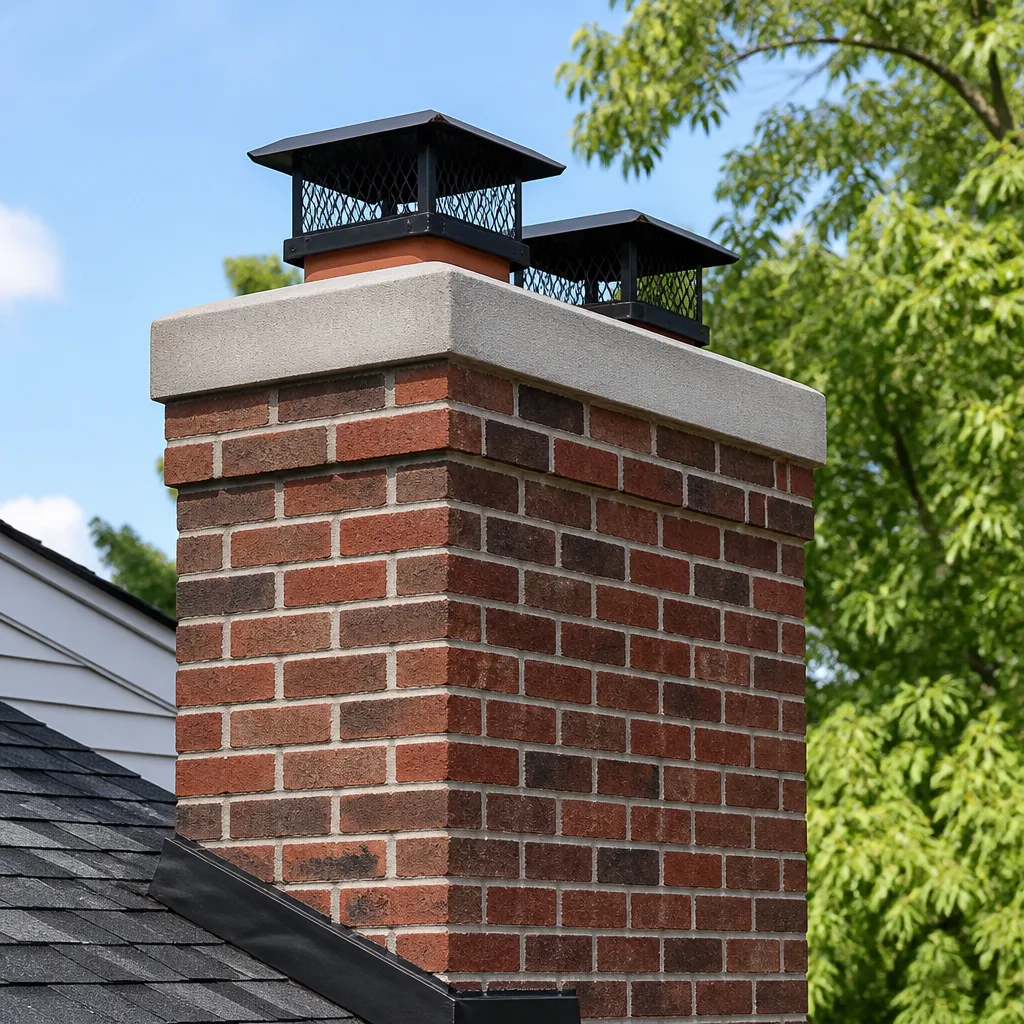 Caps & crowns
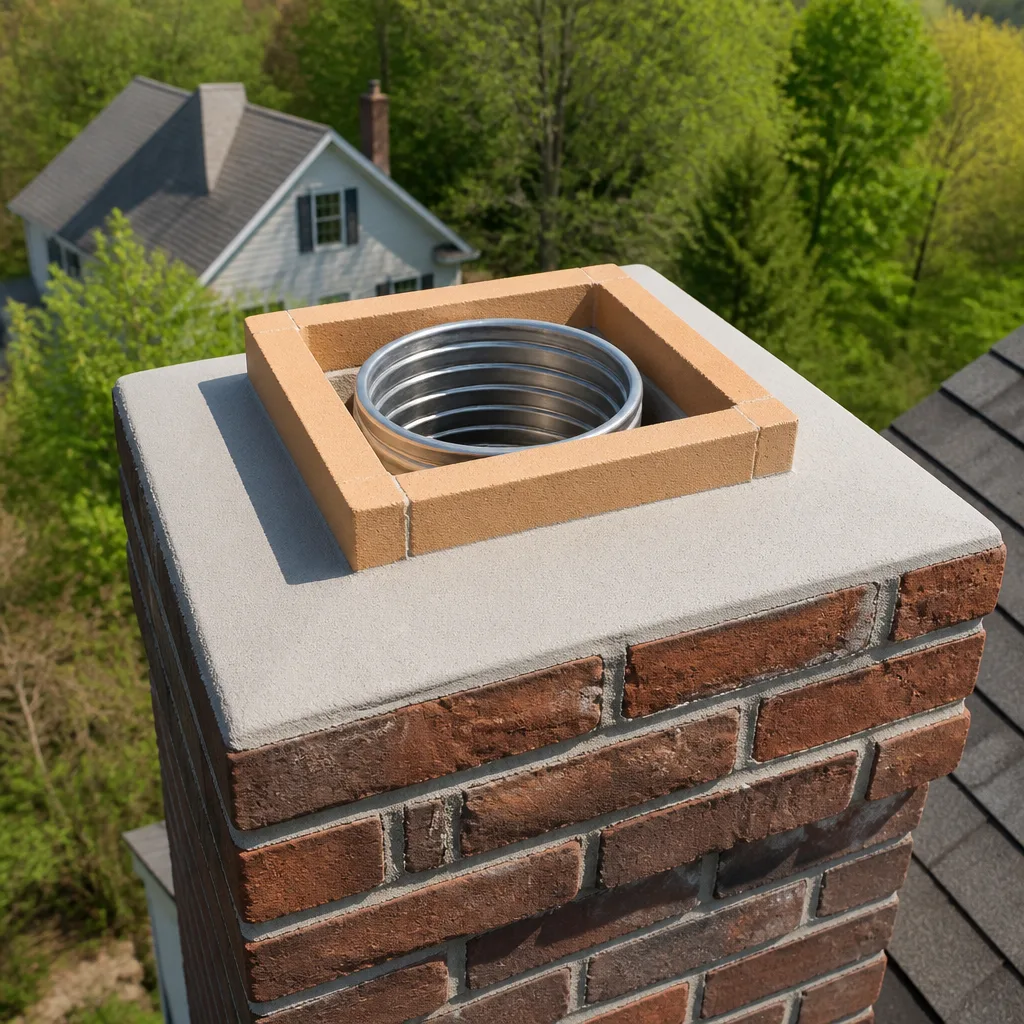 Flue relining
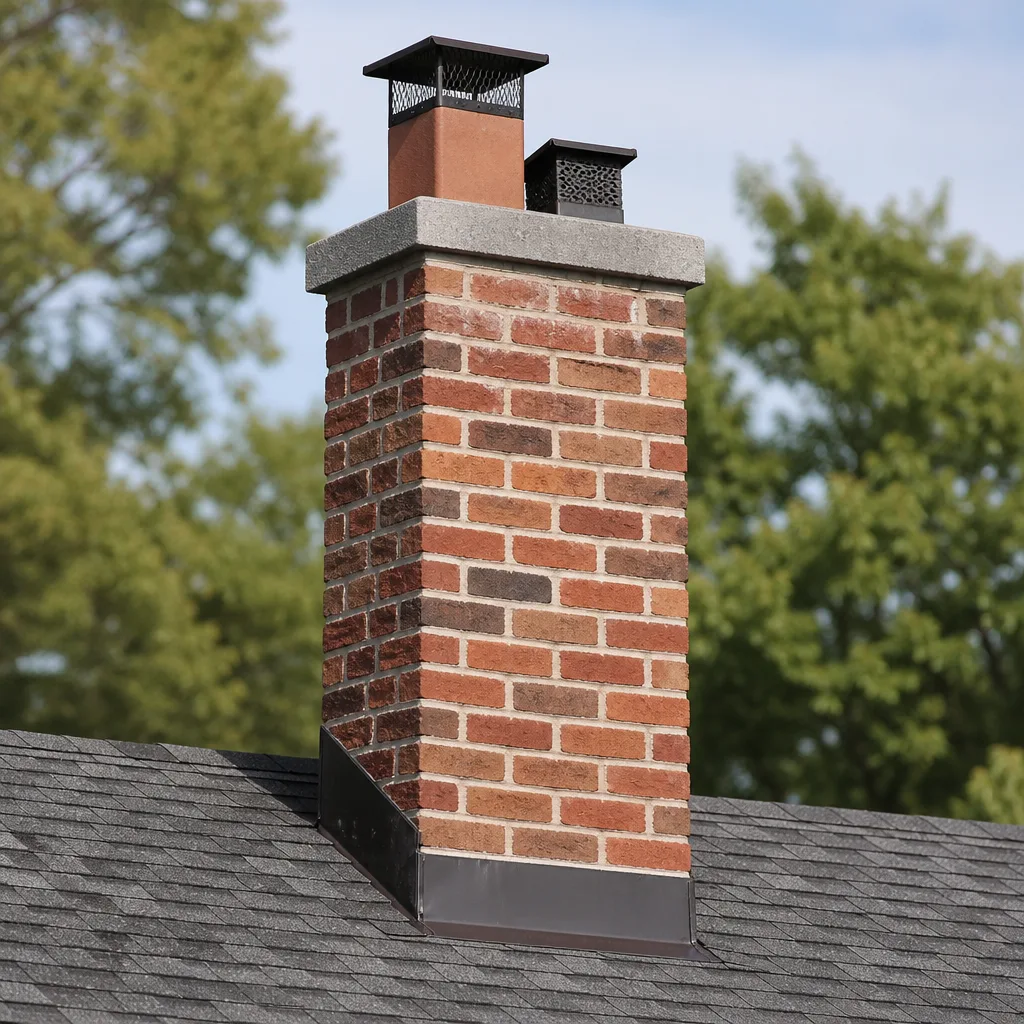 Masonry repair
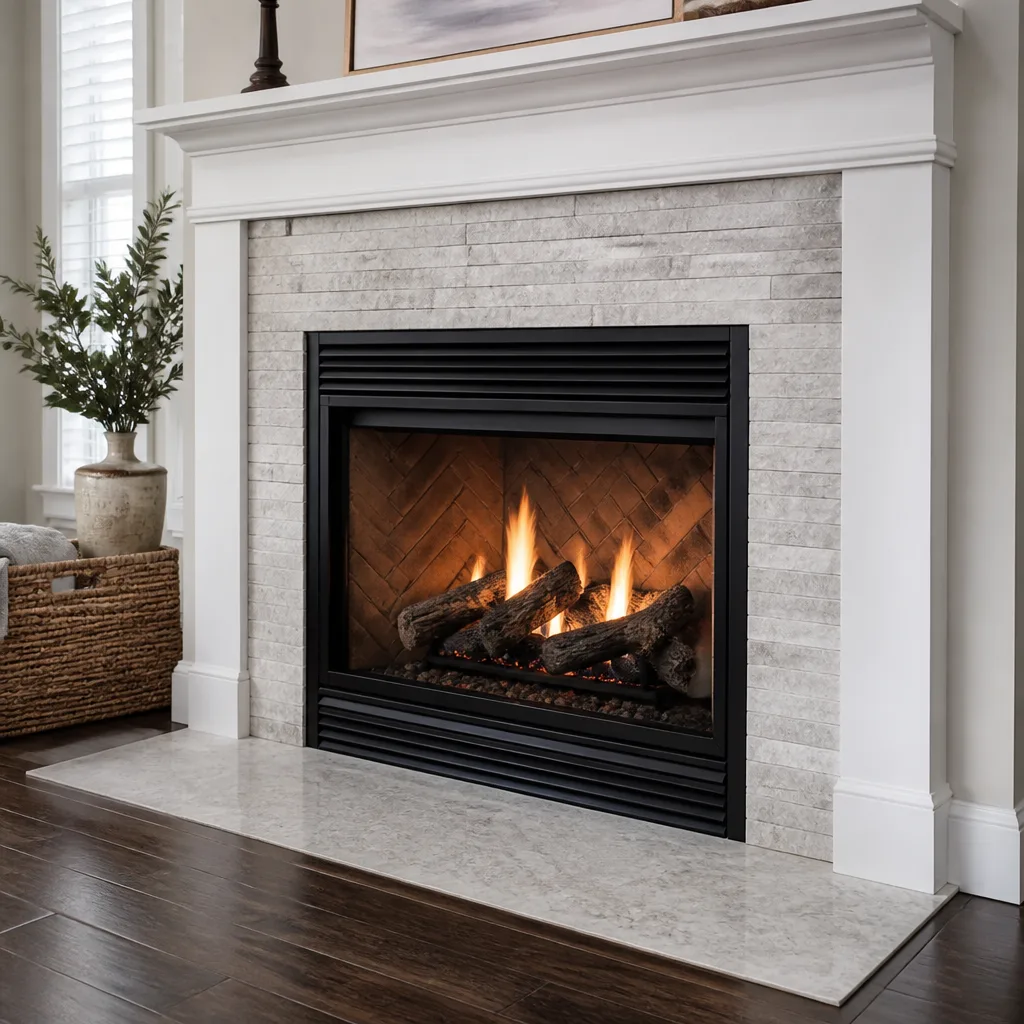 Gas fireplace service
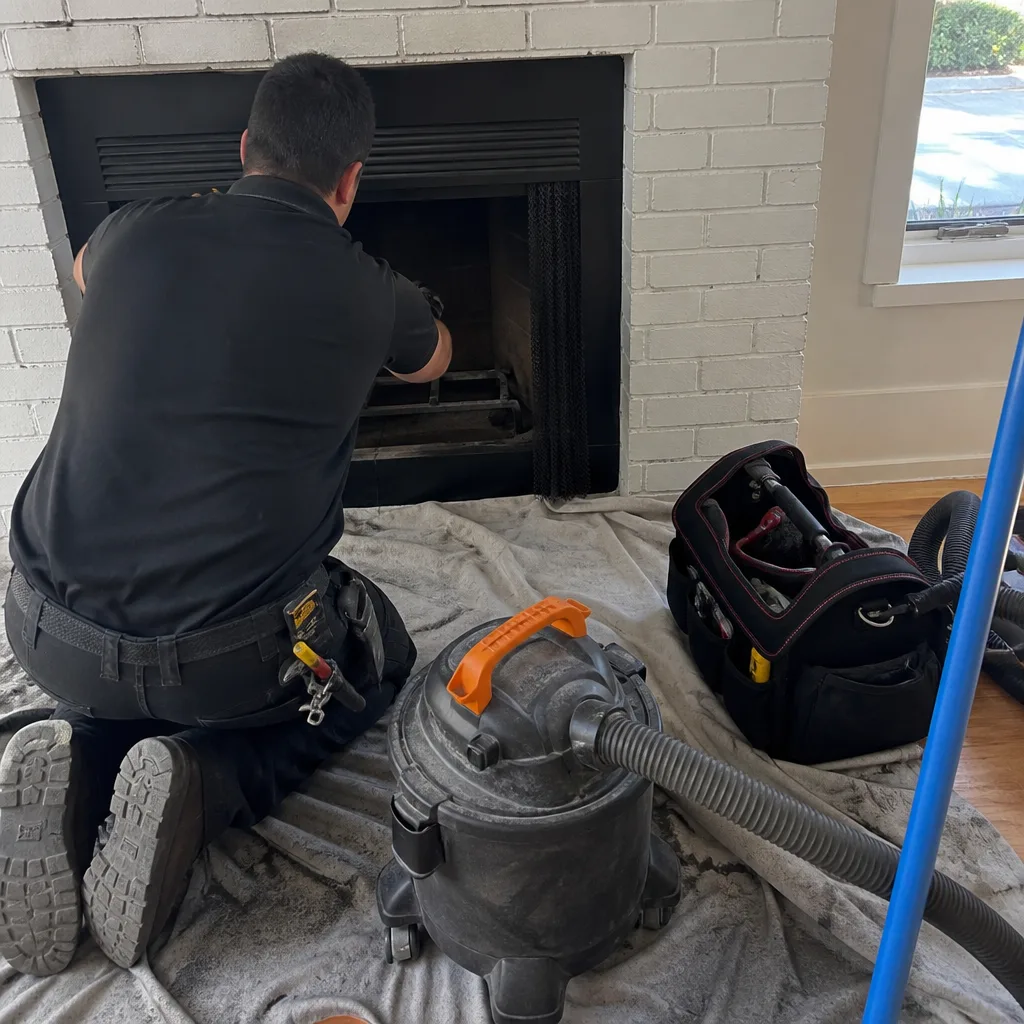
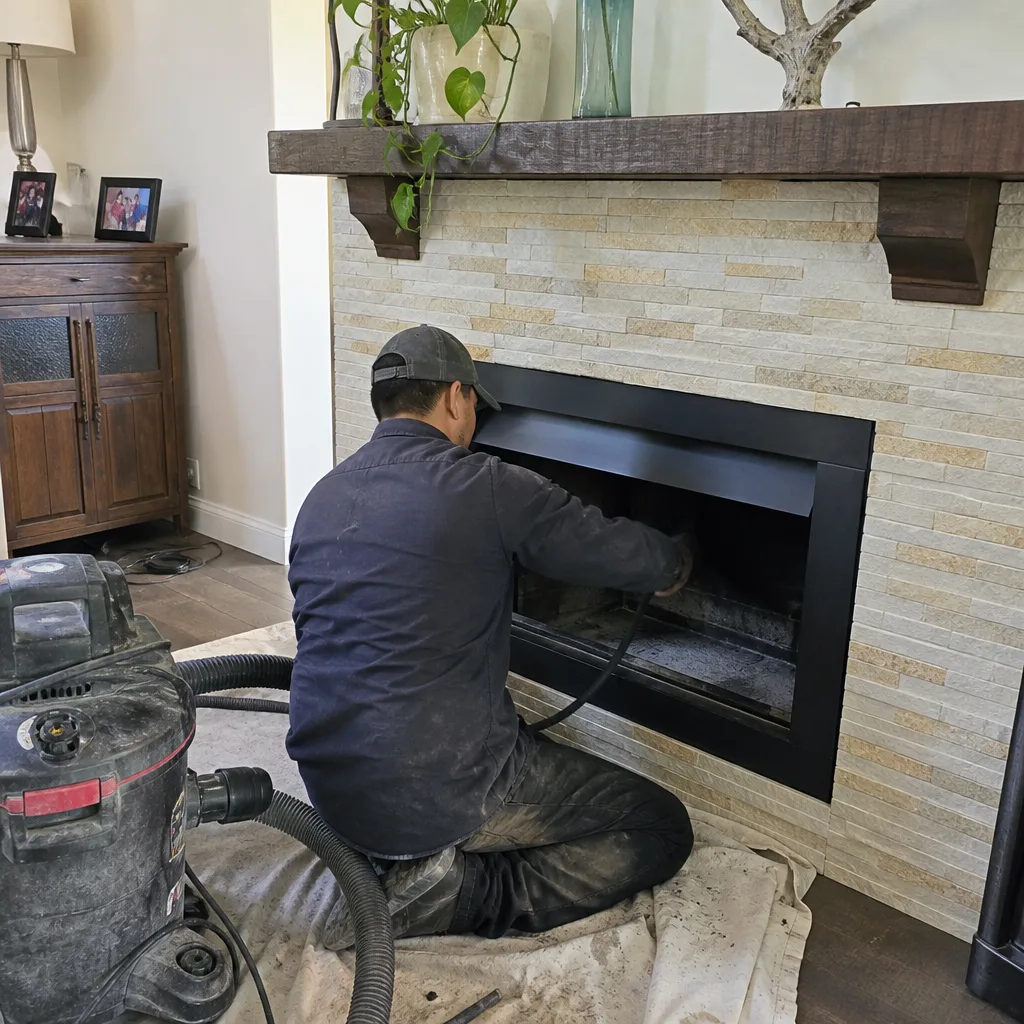
Level 1 sweep and inspection to the NFPA 211 annual standard - flue, crown, cap, and flashing checked and photographed
Chimney sweep logs do not sweep chimneys. They loosen some creosote - which then falls where a brush and vacuum still have to collect it.
Seasonal Chimney Cleaning Care for Almaden: Year-Round Homeowner’s Guide
Most Almaden homeowners schedule chimney work the way they schedule gutter cleaning: when the calendar says it’s time. October arrives, the fireplace gets swept, and everyone feels responsible. But here’s what we see on a regular basis in this valley: the damage that matters most doesn’t happen during burning season. It happens in the wet, warm months when nobody thinks about the fireplace at all. By the time October rolls around, a leaking cap has already let rainwater soak through flue tile for five months. The cleaning catches the surface soot. It does not catch the structural weakening underneath. This guide covers what each season actually does to your chimney, when maintenance genuinely needs to happen, and how to sequence your year so you’re not paying to diagnose damage that already happened months earlier. For Chimney Cleaning Cost Breakdown: The Almaden Homeowner’s Reference for 2026, see our dedicated pricing guide. We serve Almaden and the surrounding area, and the patterns below are specific to this climate, not pulled from a national template.
Quick Answer
Seasonal chimney cleaning in Almaden should follow a two-visit rhythm: a post-winter inspection and sweep in late spring (April through May) to catch moisture damage from the rainy season, plus a light pre-season check in September or early October before the first fire. The spring visit is the diagnostic one. The fall visit is the confirmation one. Dryer vent cleaning should be coordinated with whichever of those visits you already have booked, since the risk profile is different but the scheduling logic is identical.
Styles & brands we work with
- Sweep & inspection
- Caps & crowns
- Flue relining
- Masonry repair
- Gas fireplace service
Table of Contents
- Why Almaden’s Climate Punishes Chimneys Differently
- Post-Winter Inspection (April – May): The Diagnostic Sweep
- Summer Neglect: What Happens When Nothing Happens
- Pre-Season Prep: The First-Fire Sequence
- Dryer Vent Timing: Same Season, Different Risk
- Cap and Crown Monitoring: The 10-Minute Binocular Routine
- Materials and Repairs: When Cleaning Reveals Damage
- Common Mistakes to Avoid
- When to Call a Professional
- Frequently Asked Questions
Why Almaden’s Climate Punishes Chimneys Differently
Almaden sits in a Mediterranean climate zone with a specific pattern: concentrated winter rain followed by long, hot, bone-dry summers. That swing is harder on masonry than the year-round humidity you’d find in coastal climates or the freeze cycles of the Midwest. Here’s the mechanism.
Winter rain saturates the chimney crown, the mortar joints, and any hairline cracks in the flue tile. Then the summer heat arrives, routinely pushing surface temperatures well over 100 degrees on south-facing chimneys. The water trapped inside those materials expands as it heats. Clay flue tiles crack. Mortar joints spall, meaning the face of the joint pops off and falls away. The crown, which is the concrete cap at the top of the chimney, develops hairline fractures that widen each year. What started as a cosmetic problem in March becomes a structural one by September.
We also see a pattern specific to Almaden’s tree cover. The mature oaks and pines throughout Almaden Valley drop fine debris that collects on chimney crowns and inside uncapped flues. That organic material holds moisture against masonry for months at a time, accelerating the spalling problem. In neighborhoods with heavier tree canopy, like the areas around Almaden Lake Park, we consistently find more crown deterioration than in the newer developments up toward the foothills.
The takeaway is not that Almaden chimneys are uniquely fragile. It’s that the failure mode here is moisture-plus-heat cycling, and it happens during the part of the year when nobody is looking at the fireplace. Understanding that pattern is the entire reason seasonal timing matters more than the simple fact of annual sweeping.
Post-Winter Inspection (April – May): The Diagnostic Sweep
Most homeowners think of chimney cleaning as pre-season maintenance, something you do before you start using the fireplace again in fall. That’s backward for Almaden. The most valuable sweep of the year happens in late spring, after the last rain and before the real heat sets in. Here’s why.
During the winter burning season, creosote builds up inside the flue. That’s expected. But winter is also when rain, wind, and temperature swings do their structural damage. By April, the evidence is all there: soot staining from a slow cap leak, efflorescence (white mineral deposits) on the exterior brick indicating water intrusion, spalled mortar joints, a damper that’s rusted at the hinge. A spring inspection catches all of it in one visit, when the damage is fresh and before summer heat compounds it.
Equally important, a spring sweep removes the creosote before summer heat bakes it onto the flue walls. Creosote that sits through an Almaden summer cures into a harder, more glassy substance that’s significantly more difficult to remove in the fall. Sweeping in April or May is simply easier and more effective than sweeping in October for the same chimney, because the deposits haven’t had five months of heat to harden.
If your chimney needs repair work, identifying it in May gives you the entire summer to schedule that work at your convenience, without the fall rush. Chimney repair contractors, us included, are less busy in June and July than they are in October. You’ll get better scheduling flexibility and the work will be fully cured and ready before burning season starts. Waiting until September to discover you need a new crown means you’re either delaying burning season or rushing a repair in the shoulder season.
Summer Neglect: What Happens When Nothing Happens
Between May and October, the fireplace sits unused. From the homeowner’s perspective, nothing is happening. From the chimney’s perspective, summer is the most active season of the year. Here’s what we find when we inspect chimneys that went untouched through an Almaden summer.
Animal nesting. Chimney swifts are protected and will use uncapped flues in the spring. But the bigger problem in Almaden is squirrels and raccoons, especially in neighborhoods with mature oaks. A squirrel nest built in May becomes a fire hazard by October if it’s never removed, and a raccoon can do serious damage to a chimney cap or the flue interior. Even after animals leave, the nesting material remains, blocking draft or igniting on first fire.
Moisture wicking. Even after the rain stops, the masonry doesn’t dry out evenly. Morning fog, irrigation overspray, and the natural wicking action of brick pull moisture upward from the base of the chimney. That moisture carries soluble salts, which crystallize inside the brick and mortar as the water evaporates. The crystals expand and cause the mortar face to crumble. This is why we recommend a moisture barrier or water repellent on chimneys that show early efflorescence. It’s a preventive step we can apply during a spring visit that pays off for years.
Mortar joint erosion from heat expansion. Clay flue tile and brick both expand when heated. In a summer where the chimney exterior reaches 120 degrees in direct sun and cools to 55 degrees overnight, that daily expansion-contraction cycle stresses every mortar joint in the system. Joints that were cracked but stable in May can be loose by September. A spring inspection that identified minor repointing needs prevents what would otherwise be a fall discovery of loose brick and spalled joints.
Creosote baking. As noted earlier, creosote left through a hot summer cures harder. This is a known phenomenon in the trade, and it’s one reason we recommend spring sweeping for any chimney that saw regular use the previous winter. The same creosote that brushes off easily in April may require rotary tooling by October.
Pre-Season Prep: The First-Fire Sequence
If you had a proper spring sweep and inspection, the fall prep is light. If you didn’t, it’s heavier and should include a visual inspection before that first fire. Either way, here’s the sequence we recommend for every Almaden homeowner before lighting the first fire of the season.
- Open the damper fully and check its movement. A damper that’s stiff, rusted, or won’t stay open should be addressed before any fire. A partially open damper sends smoke into the house and pulls less draft.
- Look up the flue with a flashlight. From the firebox, shine a bright light up the chimney. You’re checking for visible blockage: nesting material, leaf accumulation, fallen mortar. If you see anything other than clean flue wall, don’t light a fire until it’s cleared.
- Check the cap and crown from outside. The 10-minute binocular routine in the section below covers this. You’re looking for a missing or bent cap, cracked crown concrete, or visible rust streaking on the exterior masonry.
- Smell the firebox before lighting. A strong campfire smell in a cold fireplace can indicate creosote buildup. A sharp, almost sweet smell can indicate animal presence. Both warrant a professional look before the first fire.
- Test draft with a smoke source. Roll a sheet of newspaper, light the end, and hold it near the open damper. The smoke should be pulled strongly up the flue. If it curls back into the room, the chimney is not drafting and needs investigation before use.
- Light a small fire first. Your first fire of the season should be small and relatively hot: dry kindling and a single log or two, not a full loading. This allows the flue to warm gradually and requires less draft to establish.
If any of these steps fails, or if you’re uncertain about what you’re seeing, have the chimney professionally inspected. A Chimney Sweep Almaden home visit includes a camera inspection of the flue interior, which catches problems no mirror-and-flashlight check ever will.
Dryer Vent Timing: Same Season, Different Risk
We’re unusual among chimney companies in that dryer vent cleaning is a core service for us, not an add-on. The logic of seasonal timing applies to dryer vents as strongly as it does to chimneys, but the risk picture is different. Here’s how to think about it.
Chimney fires are rare but severe. Dryer vent fires are common. The National Fire Protection Association reports that failure to clean dryer vents is a leading cause of home laundry fires, with lint accumulation being the primary ignition source. In Almaden, where many homes run their dryers year-round due to pollen and summer dust, lint builds up steadily regardless of season.
The efficient approach is to coordinate dryer vent cleaning with whichever chimney visit you already have scheduled. If you’re getting a spring sweep and inspection, add the dryer vent. If you’re getting a pre-season check in September, add it then. The marginal cost of the second service is lower than booking it separately, and it removes the one fire risk in your home that has nothing to do with the fireplace.
One Almaden-specific note: many homes here have vertical dryer vent runs through the wall and up to the roof, especially two-story houses. These runs accumulate lint at a faster rate than short horizontal vents and are more prone to bird nesting at the roof cap. If your dryer vent exits at the roofline rather than an exterior wall, annual cleaning is not optional. We see vertical runs that are 60 to 70 percent blocked after a single year of normal use.
If you’re in the downtown area and want to understand the full scope of what dryer vent cleaning involves, we’ve covered it in detail on our sister page for Dryer Vent Cleaning in Downtown San Jose. The principles apply identically to Almaden.
Cap and Crown Monitoring: The 10-Minute Binocular Routine
The chimney cap and crown are the two components that fail most often in Almaden, and both can be checked from the ground in under 10 minutes with a pair of binoculars. We recommend doing this four times a year: once after each major rain event during winter, once in mid-summer, and once before burning season. Here’s the routine.
- Stand 20 to 30 feet away from the house, at ground level, where you can see the full chimney stack. You don’t need to be on the roof. Binoculars or a zoom camera lens work fine.
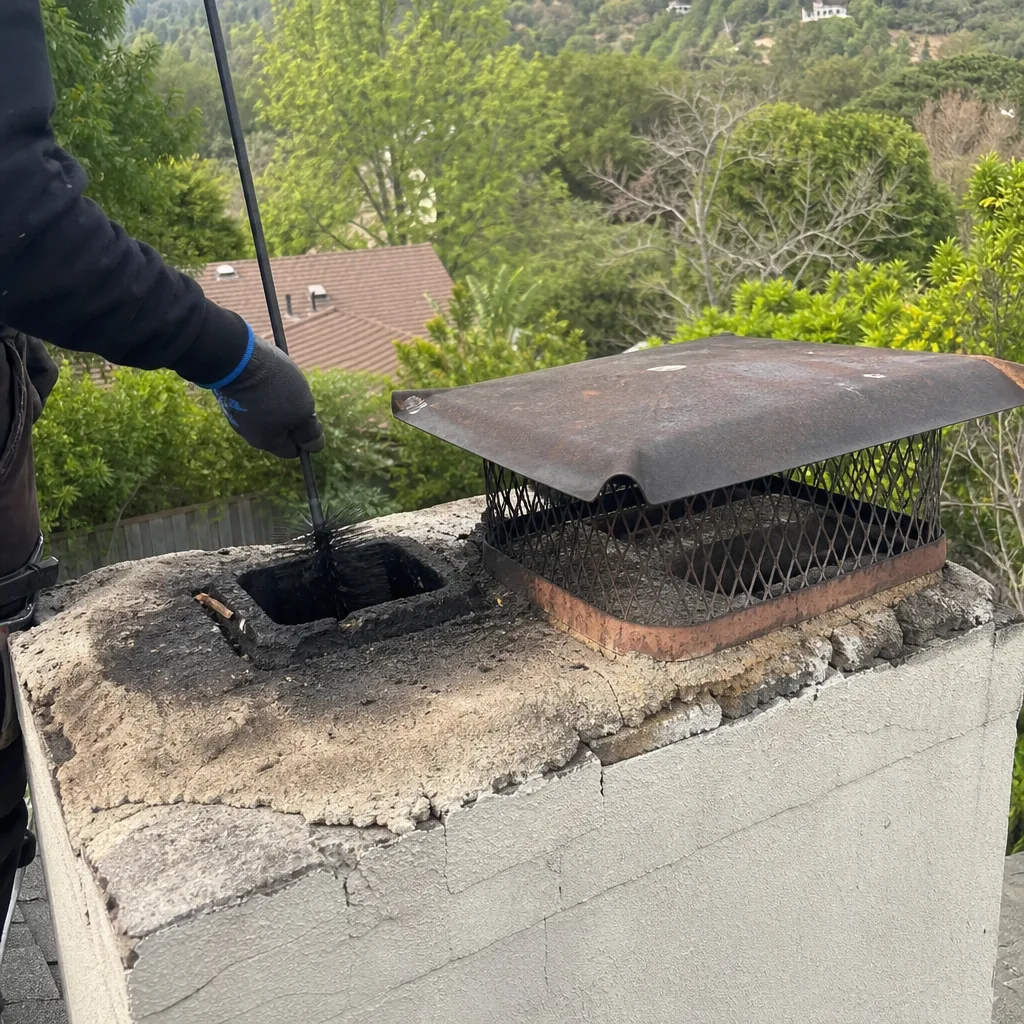
- Look at the cap first. The cap is the metal lid at the top of the flue. It should sit level and cover the flue opening completely. Look for bent metal, missing screws, rust streaks, or a cap that has shifted. A cap that’s tilted or partially detached allows rain directly into the flue.
- Look at the crown next. The crown is the concrete slab that caps the chimney structure around the flue. You’re looking for visible cracks, chunks of missing concrete, or a crown that has separated from the flue tile. Even hairline cracks admit water.
- Look for efflorescence and staining. White mineral deposits on the exterior brick below the crown indicate water is moving through the masonry. Rust-colored staining often indicates a cap or damper issue higher up. Both are signs that water is getting in.
- Take a photo. Date-stamped phone photos are the best way to track change over time. What looks like a minor crack in April may be visibly wider by September. Photos make that comparison objective.
If you see any of these signs, schedule an inspection. A damaged cap is often a $40 to $90 replacement part, while the water damage from an unrepaired cap leak can cost thousands in liner, flue, or masonry work. The economics of the 10-minute check are simple. Ours is a full-service chimney repair shop, so if a cap issue needs replacement, we source parts through supply partners like Olympia Chimney and Famco, which means we carry or can quickly obtain the right component rather than making do with an ill-fitting generic part.
Materials and Repairs: When Cleaning Reveals Damage
One of the reasons we structure chimney cleaning the way we do is that a sweep is rarely just a sweep. In roughly one out of four chimneys we open up in Almaden, the camera inspection during routine cleaning reveals a problem that needs repair: a cracked flue tile, a deteriorated mortar joint, a liner that’s separated at a seam. When that happens, the question is what happens next.
If you’ve hired a sweep-only service, the answer is a referral to someone else. You start over with a new company, a new appointment, and a new quote. If the original company missed the problem, you’ll never know. This is why our scope includes Chimney Repair in Downtown San Jose as a core service alongside sweeping. The person who finds the problem is the person who fixes it.
When a flue is compromised, the repair path in most cases is a reline or resurfacing. We use DuraFlex flexible liner systems for relining, which is the professional-grade standard for this work. For flues with more limited damage, HeatShield resurfacing technology can restore the interior surface without a full liner replacement. Both are methods that most sweep-only services don’t offer, and both are installed by the same technician who conducted the initial camera inspection.
The material question matters. A chimney repair is only as good as the component that goes into it. Cheap flue liners, ill-fitting caps, and improper mortar mixes fail early. We source components through Olympia Chimney, Famco, and Copperfield supply networks, which gives us access to the same materials the certified installers use, in the correct sizes and configurations. The right part, sourced right, installed by the person who diagnosed the problem. That’s the full sequence.
Common Mistakes to Avoid
- Treating the fall sweep as the only maintenance event of the year. By October, any moisture damage from the previous winter and spring has already occurred. The fall sweep confirms readiness, but it doesn’t catch problems early.
- Ignoring efflorescence because it’s cosmetic. In Almaden’s wet-dry climate, efflorescence is an early warning of water intrusion. If it’s ignored, the underlying masonry damage worsens every cycle until repointing or crown replacement becomes necessary.
- Assuming a chimney cap is a permanent fixture. Caps are exposed to wind, birds, and temperature swings year-round. We replace more damaged caps in Almaden than any other single component, and most of those could have been caught by a 10-minute binocular check.
- Cleaning the chimney but not the dryer vent. It’s the same seasonal logic and the same visit. A household that’s diligent about chimney maintenance but hasn’t cleaned the dryer vent in five years still has a significant undressed fire risk.
- Skipping the camera inspection to save money. A visual sweep with brushes can leave a chimney looking clean while a cracked flue tile hides behind a bend. Camera inspection is the difference between cleaning and diagnosing, and it’s the single most valuable part of the visit.
- Delaying a small repair until “next season.” A hairline crown crack in May becomes a spalled crown by September. Small masonry issues compound in Almaden’s summer heat. The cheapest time to fix a chimney problem is the day it’s discovered.
- Using the fireplace to test whether it still works. The first fire of the season is a diagnostic event whether you intend it to be one or not. If the chimney is blocked or drafting poorly, that first fire can be the moment a small problem becomes a house fire. Test the draft before you test the fireplace.
When to Call a Professional
If your binocular check reveals a shifted cap, cracked crown, or water staining on the chimney exterior, call before the next rain. If you smell a strong creosote odor from a cold fireplace or see visible soot falling into the firebox, skip the do-it-yourself checks and have the flue camera-inspected. If you’ve never had your dryer vent cleaned and you don’t know when the previous owner last did it, assume it’s due. If your chimney is 15 years or older and hasn’t had a structural inspection, the wear from Almaden’s heat cycles is cumulative and should be assessed. Review Chimney Cleaning Permits, Codes & Inspections in CA: What You Need to Know before scheduling major work. Chimney Sweep Almaden offers free estimates in Almaden. Call (833) 593-6691 to schedule.
Frequently Asked Questions
If you burn wood regularly during the winter, sweep it once per year, and schedule that sweep in late spring rather than fall. If you have a gas fireplace, every two years is typically sufficient for cleaning, but an annual inspection is still worth doing because gas flues corrode rather than soot up. Almaden’s specific moisture patterns mean the spring visit catches water damage that a fall visit misses.
A standard chimney sweep in Almaden typically runs between $150 and $250, depending on chimney height, flue accessibility, and whether it’s a wood or gas system. If the sweep includes camera inspection and a same-visit dryer vent cleaning, expect the combined total to land in the $250 to $400 range. Chimney repair work is quoted separately after inspection. Call (833) 593-6691 for an exact quote for your home. Estimates are free.
You should never accept a liner recommendation without seeing camera evidence. A legitimate diagnosis includes video footage showing the crack, separation, or deterioration, and you should be shown that footage before you’re asked to approve anything. If a contractor recommends a new liner without a camera inspection, get a second opinion. We show every homeowner their camera footage and explain exactly what we’re seeing. Liners fail in Almaden due to moisture cycling, and when they fail, the fix is a DuraFlex reline or HeatShield resurfacing depending on the damage extent.
The most likely outcomes are creosote buildup that increases fire risk, a blocked flue from animal nesting that prevents proper drafting, and moisture damage that worsens with each wet winter and hot summer. None of these are catastrophic on their own in the short term. The risk is that you won’t know which one is developing until a fire behaves strangely, smoke backs up into the house, or a small chimney fire occurs. In Almaden, the moisture issue is the one that silently compounds the fastest.
You can remove loose surface soot from the firebox and the first few feet of flue with a brush, but that’s not the same as a full sweep, and it gives you a false sense of what the chimney looks like. The critical part of professional cleaning is the camera inspection, which shows what’s happening in the middle and upper flue where you can’t see. You also can’t safely access the flue from the roof without proper equipment and fall protection. This is a case where doing it halfway creates more risk than doing nothing, because you’ll believe the chimney is clean when it isn’t. If you’re in the area, our service page for Chimney Sweep in Downtown San Jose covers what a full professional sweep involves.
Yes. The seasonal logic is the same, the visit is coordinated, and the combined cost is lower than booking two separate appointments. The dryer vent is not the same system and isn’t addressed by chimney cleaning, but the same technician can perform both during one visit. We recommend this pairing because most Almaden homeowners have a dryer vent that hasn’t been cleaned since the home was purchased, and the marginal cost of adding that service to an existing chimney visit is modest compared to the fire risk it removes. Call (833) 593-6691 to book both.
The Bottom Line
Almaden’s climate creates a specific chimney risk pattern: wet winters saturate masonry, hot summers bake it, and the damage compounds silently during the months when nobody is watching. The homeowner who schedules a spring inspection and sweep, maintains a simple cap-and-crown check routine, and coordinates dryer vent cleaning with the same visit has effectively removed the year-round risk stack. The homeowner who waits for October has not. This is not about being fastidious. It’s about matching your maintenance to the actual failure sequence of your climate. Do the diagnostic work in spring. Confirm readiness in fall. Clean the dryer vent whenever it’s convenient. That’s the whole system. Explore more guides & resources on year-round chimney care.
Written by the team at Chimney Sweep Almaden, serving Almaden since 2017.
See the difference
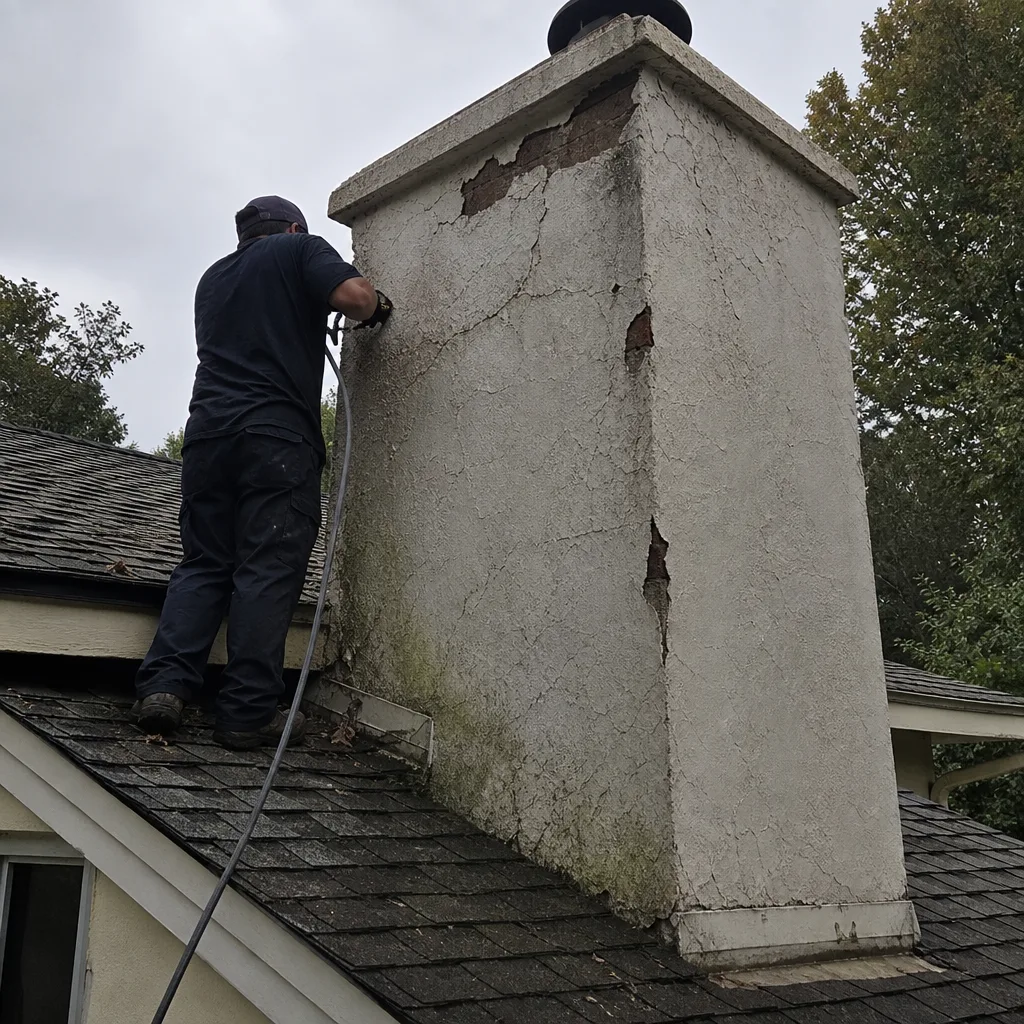 Before
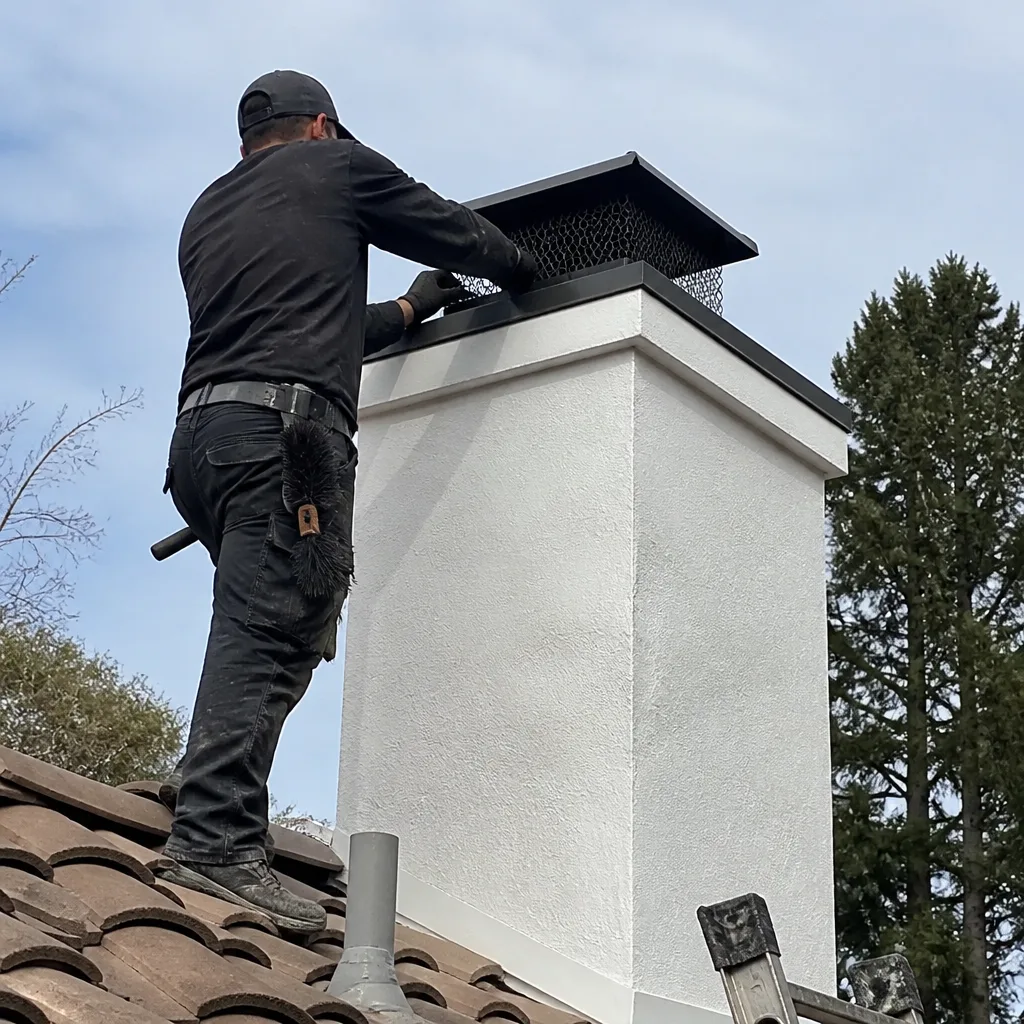 After
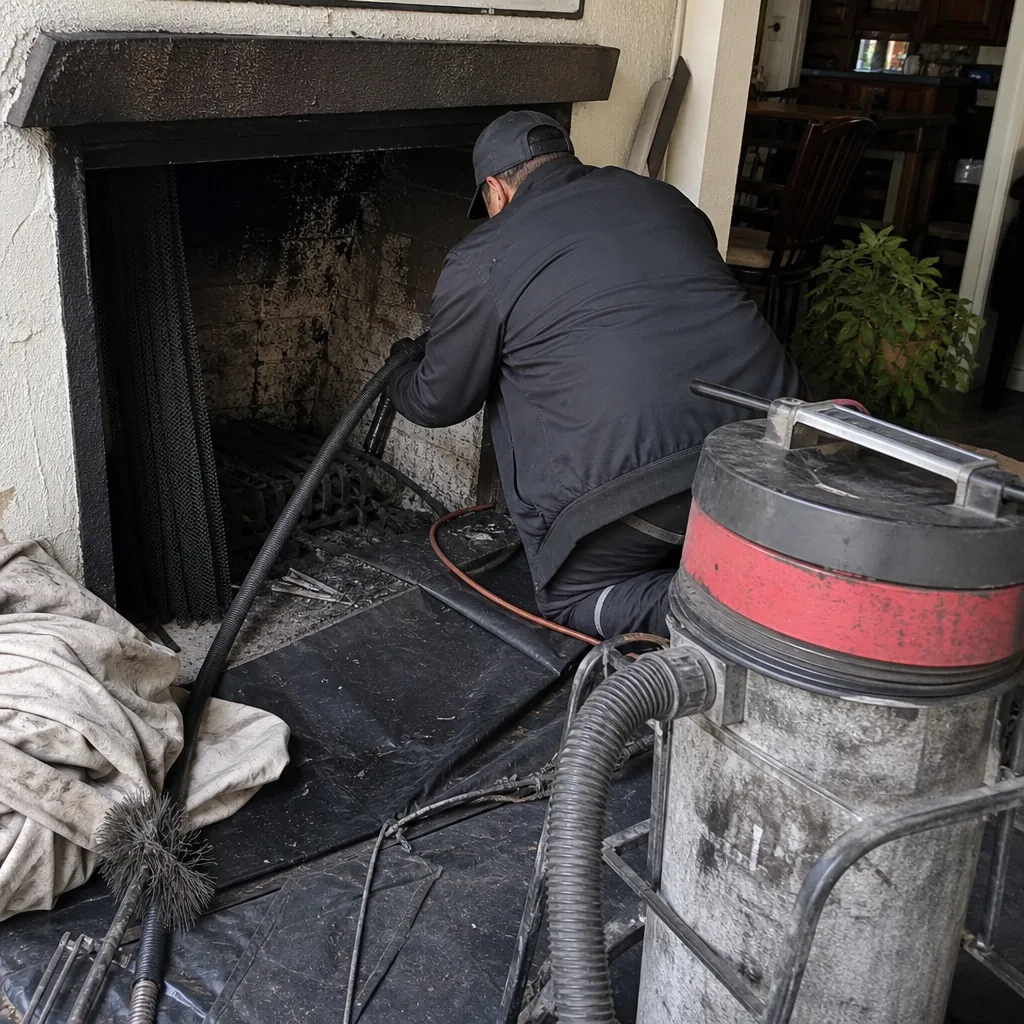 Before
 After
 Before
 After